The world of 3D printing is constantly evolving, with innovations pushing the boundaries of what’s possible. Among the various motion systems that govern how a 3D printer operates, the Corexy 3d Printer design has emerged as a true game-changer, celebrated for its unique blend of speed, precision, and efficiency. If you’ve been hearing buzz about CoreXY and wondering what makes it so special, you’ve come to the right place. As a veteran in the 3D printing space, I’m here to demystify this advanced technology and show you why it’s captivating hobbyists and professionals alike.
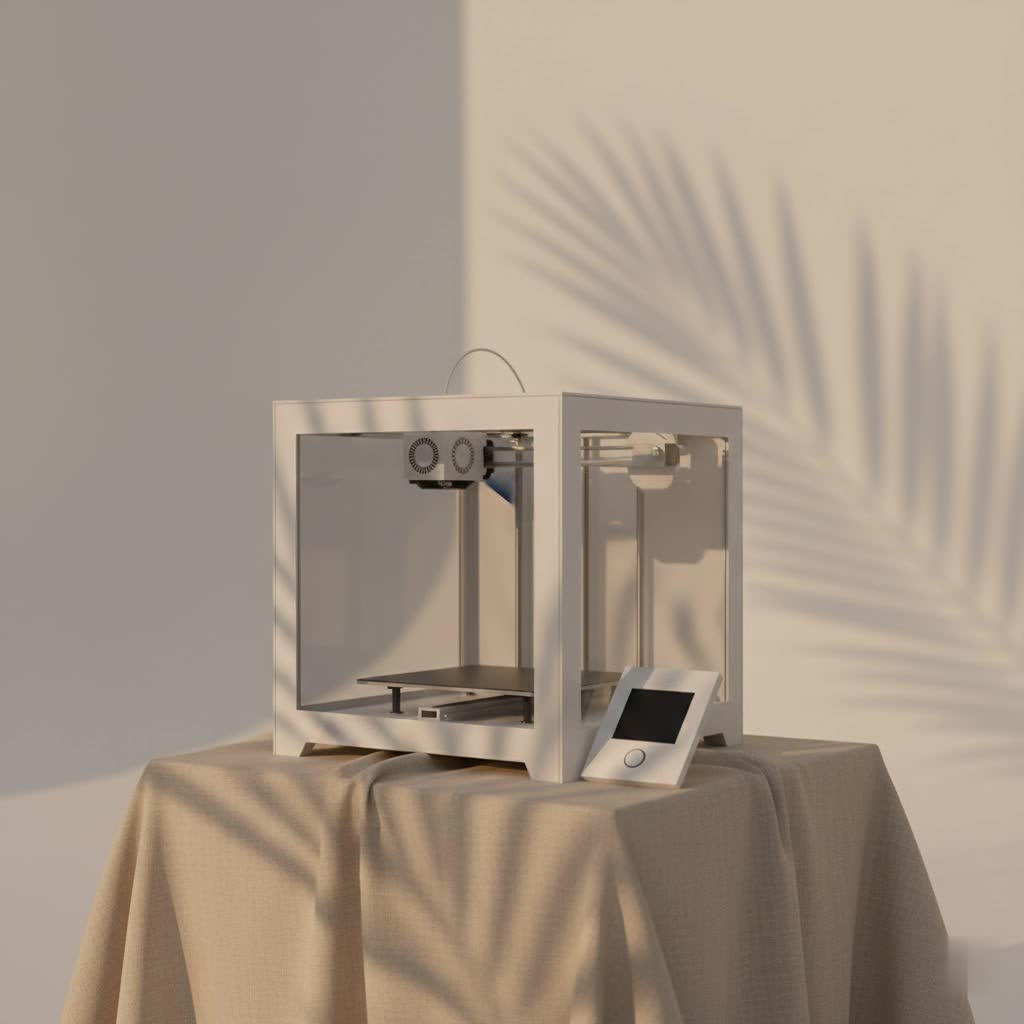
At its heart, a CoreXY 3D printer represents a specialized kinematic arrangement that redefines how the print head moves across the build area. Unlike some conventional setups, the CoreXY system employs a clever belt-driven mechanism that allows for exceptional agility and accuracy, setting a new standard for modern FDM (Fused Deposition Modeling) machines.
What Exactly is a CoreXY 3D Printer?
A CoreXY 3D printer utilizes a unique motion system where the two stepper motors responsible for X and Y axis movement are fixed to the printer’s frame. This is a fundamental departure from many other designs, where motors often move along with one or more axes. By keeping these motors stationary, the CoreXY system significantly reduces the moving mass of the print head assembly.
How does it work its magic? Imagine an intricate dance of belts. Two long belts run along the top gantries and frame, connecting to the print head carriage. These belts are configured in such a way that both motors work in coordination to control the movement along both the X and Y axes. When one motor rotates, the print head moves diagonally, and when both motors turn in specific directions, the print head moves linearly along either the X or Y axis. This synchronized movement is key to its high performance.
Another defining characteristic of most CoreXY 3D printers is their stationary print bed for horizontal movements. While the print bed typically moves vertically (Z-axis) to accommodate layer-by-layer deposition, it remains perfectly still during X and Y axis movements. This stability minimizes vibrations and momentum issues, which are critical for achieving consistent print quality, especially as prints grow larger and heavier.
CoreXY vs. Cartesian: A Tale of Two Motion Systems
When discussing a CoreXY 3D printer, it’s almost impossible not to compare it with its Cartesian cousins. While CoreXY technically falls under the broader umbrella of Cartesian systems (which use Cartesian coordinates for movement), it stands apart from what many people commonly refer to as a “Cartesian” printer – specifically, the “bed slinger” style.
In a traditional “bed slinger” Cartesian printer (like many Prusa i3 variants), the print head moves along the X-axis, while the print bed moves back and forth along the Y-axis. This means the print bed, along with the print itself, is constantly accelerating and decelerating, adding significant moving mass and potentially leading to vibrations or “ghosting” artifacts, especially at higher speeds.
A CoreXY 3D printer, in contrast, fixes the X and Y motors and typically keeps the print bed stationary for horizontal movement. This design makes the moving parts much lighter, allowing for significantly faster acceleration and higher print speeds. The print head itself is often the heaviest moving component, and by decoupling its weight from the motors, CoreXY achieves a mechanical advantage that translates directly into real-world performance benefits. “The elegance of the CoreXY system lies in its ability to leverage fixed mass for dynamic motion, creating a stable platform for rapid prototyping and detailed production,” explains Dr. Anya Sharma, a leading expert in additive manufacturing kinematics.
The Unmistakable Advantages of CoreXY 3D Printers
The unique engineering behind a CoreXY 3D printer translates into several compelling advantages that make it a favorite for many serious 3D printing enthusiasts and professionals.
Unleashing Blazing Speeds
|
Our Picks for the Best 3D Printer in 2026
As an Amazon Associate I earn from qualifying purchases.
|
||
| Num | Product | Action |
|---|---|---|
| 1 | FLASHFORGE AD5M Pro 3D Printer 600mm/s High Speed & Precision, Full-Auto Calibration with 0.4&0.6mm Nozzle Bundle, CoreXY Structure & Auxiliary Chamber Cooling, ≤50 dB Quite Printing Camera Printers |

|
| 2 | Creality K2 SE Combo 3D Printer, Support Multicolor Printing with CFS, 500mm/s High-Speed, Smart Auto Leveling, Solid Metal Build Frame, Fully Assembled, Next-Gen Extruder, 220×215×245 mm Build Volume |
|
| 3 | FLASHFORGE AD5X Multi-Color 3D Printer, CoreXY 600mm/s High-Speed, 1-Click Auto Leveling, 300°C Direct Drive Extruder, 220x220x220mm Build Volume, Ideal for Precision and Efficiency |
|
| 4 | FLASHFORGE Adventurer 5M 3D Printer with Fully Auto Leveling, Max 600mm/s High Speed Printing, 280°C Direct Extruder with 3S Detachable Nozzle, CoreXY All Metal Structure, Print Size 220x220x220mm |
|
| 5 | FLASHFORGE AD5M 3D Printer Fully Auto Calibration Print with 1-Click Max 600mm/s Speed, All-Metal CoreXY Structure Precise Printing, Easy-Maintenance Quick-Swap Nozzle, Print Size 220x220x220mm |
|
| 6 | FLASHFORGE Adventurer 5M Pro 3D Printer with 1 Click Auto Printing System, 600mm/s High-Speed, Quick Detachable 280°C Nozzle, Core XY All-Metal Structure, Multi-Functional 220x220x220mm 3D Printer |
|
| 7 | Creality Ender 3 V3 SE 3D Printer, 250mm/s Faster Print Speed CR Touch Auto Leveling Sprite Direct Extruder Dual Z-Axis Auto Filament Loading Ender 3 Upgrade 3D Printer Print Size 8.66x8.66x9.84 inch |
|
| 8 | FLASHFORGE AD5X Multi-Color 3D Printer 4 Colors with IFS, Fully Auto Leveling FDM 3D Printer with Max 600mm/s High Speed Printing and Max 300°C Nozzle, Large Printing Size 220 * 220 * 220mm |
|
| 9 | Anycubic Multicolor 3D Printer, Kobra S1 Combo Core XY Stable Structure with Sealed Printing High Precision 600mm/s Fast Speed Auto Calibration Ideal for Precision and Efficiency 9.8\"x9.8\"x9.8\" |
|
| 10 | FLASHFORGE AD5X Multi-Color 3D Printer with IFS, 600mm/s High Speed, 300°C High Temp Direct Extruder, Fully Auto Leveling, All Metal CoreXY,4-Color Printing for PLA-CF,PETG-CF, 220x220x220mm |
|
One of the most celebrated attributes of a CoreXY 3D printer is its incredible speed. Because the heavy stepper motors are fixed to the frame and only the lightweight print head moves along the X and Y axes, the system can achieve much higher accelerations and travel speeds. This means you can significantly reduce your print times without compromising on quality, making it ideal for rapid prototyping or high-volume production. When milliseconds matter, a CoreXY machine truly shines.
Unrivaled Precision and Print Quality
Speed is often associated with a trade-off in quality, but not so with CoreXY. The reduced moving mass minimizes inertia, leading to fewer vibrations and smoother motion, especially during rapid direction changes. This inherent stability, coupled with the often-stationary print bed for horizontal movements, allows for exceptionally precise control over the nozzle’s path. The result? Sharper details, smoother surfaces, and improved dimensional accuracy on your finished prints. Many users report a noticeable reduction in artifacts like ringing or ghosting compared to other designs.
Smart Space Utilization: Compact Yet Capable
Despite often offering generous build volumes, many CoreXY 3D printers boast a surprisingly compact footprint. Since the print bed doesn’t need to move back and forth along an entire axis, the overall machine size can be more efficient relative to its build area. This makes CoreXY printers an excellent choice for workshops or home setups where space is at a premium, allowing you to get a larger print volume without needing a sprawling machine. The enclosed, boxy frame common to CoreXY designs also makes them easier to enclose for printing with temperature-sensitive materials.
Enhanced Motor Longevity
Another subtle but significant advantage of having fixed stepper motors is their protection from heat. In some printer designs, motors can be exposed to heat generated by the print bed or hot end. By keeping the motors stationary and often away from these heat sources, CoreXY designs can contribute to a longer lifespan for these critical components and more consistent performance over time.
Navigating the Nuances: Potential Drawbacks of CoreXY
While the benefits of a CoreXY 3D printer are considerable, it’s also important to have a balanced perspective. Like any advanced technology, CoreXY systems come with their own set of challenges.
The Intricacies of Assembly and Maintenance
The very thing that gives CoreXY its speed and precision – its complex belt and pulley system – can also be its biggest hurdle, especially for newcomers. Assembling a CoreXY 3D printer from a kit requires meticulous attention to detail. Achieving perfect frame alignment and, crucially, consistent belt tension across the entire system is paramount. Even a slight misalignment or uneven tension can lead to print defects. This means initial setup can be more challenging and time-consuming than with simpler Cartesian designs, and it demands a higher level of precision during construction.
Similarly, ongoing maintenance can be more involved. While robust, the long belt paths and numerous pulleys require regular inspection for wear, stretching, and proper lubrication. “The beauty of CoreXY is its precision, but that precision demands respect for its mechanics. Regular checks of belt tension and pulley alignment are non-negotiable for sustained high performance,” advises our WMTSV.com resident 3D printing guru, Alex Petrov. If you’re not comfortable with a bit of tinkering and calibration, this might be a steeper learning curve.
Initial Investment: A Higher Price Tag
Generally speaking, CoreXY 3D printers tend to have a higher initial cost compared to entry-level Cartesian “bed slinger” machines. This is primarily due to the more complex mechanical design, the need for higher-quality components (especially for belts, pulleys, and linear rails to ensure precision), and often, more advanced firmware to coordinate the dual-motor movements seamlessly. While the long-term benefits in speed and quality can offset this investment, it’s a factor to consider for budget-conscious buyers.
Z-Axis Speed Disparity
While the X and Y axes of a CoreXY 3D printer boast incredible speed and agility, the Z-axis often relies on more traditional lead screw mechanisms for vertical movement. While reliable, these methods typically can’t match the rapid pace of the CoreXY’s horizontal motion. This can sometimes create a performance disparity, where the Z-axis becomes the limiting factor in overall print speed, especially for very tall objects or when using advanced Z-hop settings.
Is a CoreXY 3D Printer Right for You?
So, after delving into the mechanics, advantages, and challenges, is a CoreXY 3D printer the right choice for your 3D printing journey? If your priorities include:
- High-speed printing: You need to produce parts quickly, whether for prototyping, small-batch manufacturing, or simply to get through your print queue faster.
- Exceptional print quality: You demand intricate details, smooth finishes, and accurate dimensions for your functional parts or aesthetic models.
- Printing with advanced materials: The ability to enclose the printer (often easier with CoreXY’s boxy frame) and the stable platform can be beneficial for materials like ABS, ASA, or Nylon.
- A passion for optimization: You enjoy understanding the mechanics of your machine and are comfortable with the occasional calibration and maintenance to keep it running at its peak.
Then a CoreXY 3D printer is definitely worth considering. It represents a significant step forward in desktop FDM technology, offering performance that was once only available on much more expensive industrial machines.
Frequently Asked Questions (FAQs)
What makes a CoreXY printer faster than a Cartesian?
A CoreXY 3D printer achieves higher speeds primarily because its X and Y axis motors are stationary. This design significantly reduces the moving mass of the print head, allowing for much faster acceleration and deceleration without introducing excessive vibrations or loss of print quality.
Are CoreXY printers difficult to assemble?
Compared to simpler Cartesian designs, assembling a CoreXY 3D printer can be more complex due to its intricate belt routing and the critical need for precise frame alignment and even belt tension. However, with careful attention to instructions, it’s a rewarding build for those with some technical aptitude.
Can CoreXY printers print larger objects?
Yes, CoreXY 3D printers are often designed to offer larger build volumes in a more compact machine footprint. Their motion system efficiently uses space, making them excellent for printing sizable objects without requiring an overly large printer frame.
How often do I need to maintain a CoreXY printer?
Regular maintenance is crucial for a CoreXY 3D printer to ensure optimal performance. This typically involves checking belt tension, inspecting belts and pulleys for wear, and ensuring linear rails are clean and lubricated. The frequency depends on usage, but a quick check every few print jobs and a more thorough inspection monthly is a good practice.
Is CoreXY the future of 3D printing?
While no single technology is the “only” future, the CoreXY 3D printer design is undeniably a leading contender for high-performance FDM printing. Its balance of speed, precision, and compact design positions it as a dominant force in both enthusiast and professional segments, continually pushing the boundaries of what desktop 3D printing can achieve.
Conclusion
The CoreXY 3D printer has carved out a significant niche in the additive manufacturing world, proving that intelligent mechanical design can lead to profound performance enhancements. By embracing stationary motors and a meticulously engineered belt system, CoreXY machines deliver blazing speeds, exceptional precision, and a compact form factor that makes them a compelling choice for a wide array of applications. While they demand a bit more attention during assembly and maintenance, the rewards in print quality and efficiency are undeniable. If you’re ready to elevate your 3D printing experience, exploring the power of CoreXY is a journey well worth taking. Dive in, experiment, and prepare to be amazed by what these incredible machines can create!
