Have you ever wondered about the incredible advancements shaping modern manufacturing? Today, we’re diving deep into one of the most revolutionary technologies: the 3d Printer That Prints Metal. This isn’t just a futuristic concept; it’s a present-day reality transforming industries from aerospace to medicine, allowing us to create intricate, high-performance metal parts with unprecedented freedom and precision. If you’re keen to understand how this innovative technology works, its far-reaching applications, and what it means for the future of production, you’re in the right place.
What Exactly is a 3D Printer That Prints Metal?
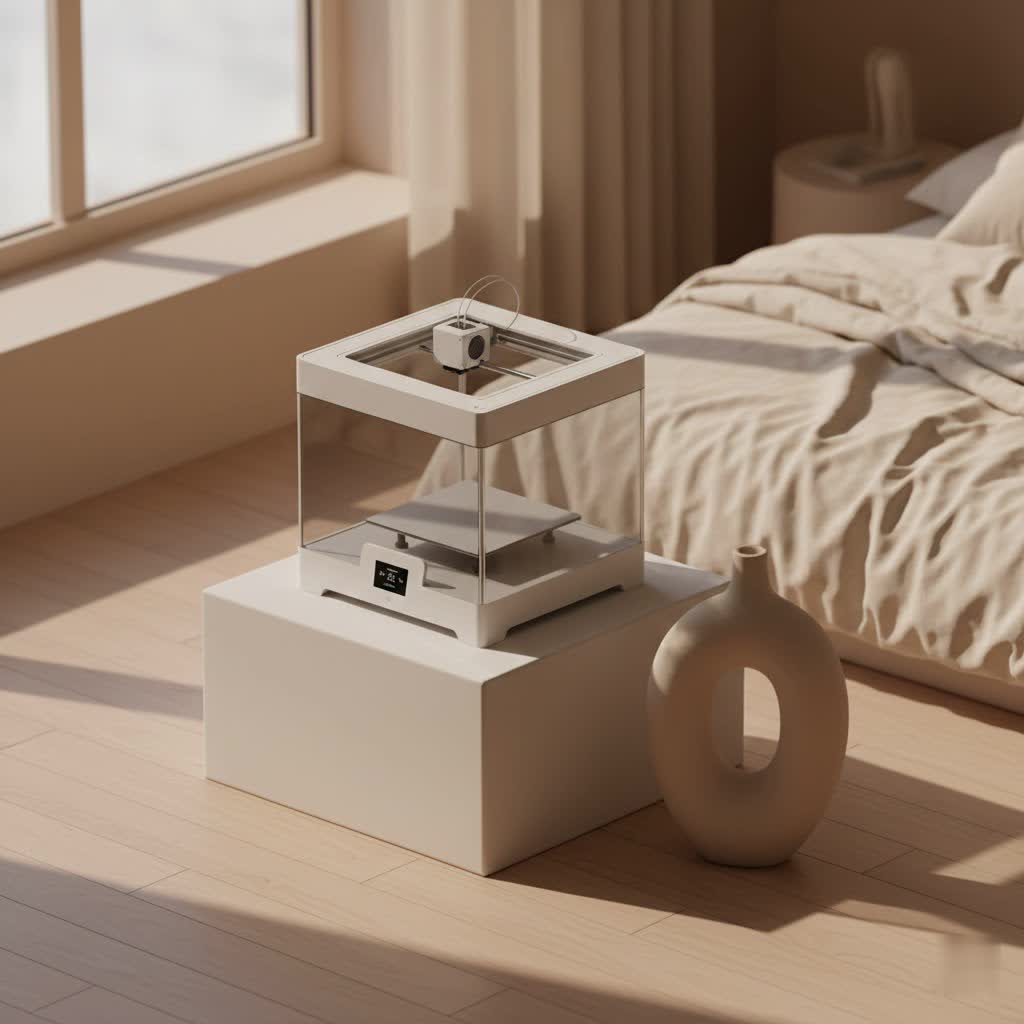
At its core, a 3D printer that prints metal is a marvel of additive manufacturing. Unlike traditional methods that cut material away from a larger block (subtractive manufacturing), metal 3D printing builds objects layer by layer, directly from a digital design. Imagine a highly sophisticated machine meticulously fusing fine metal powders or wires together, guided by a computer-aided design (CAD) model, until a solid, three-dimensional metal part emerges. This layer-by-layer approach minimizes waste and enables the creation of geometries previously considered impossible.
The process typically begins with a 3D CAD model, which is then digitally sliced into thousands of thin cross-sections. This digital blueprint guides the metal 3D printer, telling it precisely where and how to deposit and fuse material for each subsequent layer. The result is a fully formed object with intricate details and precise specifications.
The Technologies Behind Metal 3D Printing: A Deep Dive
The world of metal additive manufacturing isn’t a one-size-fits-all solution; it encompasses several distinct technologies, each with its own advantages and ideal applications.
Powder Bed Fusion (PBF): The Workhorse
Powder Bed Fusion (PBF) is arguably the most prevalent category in industrial metal 3D printing. These processes use a thermal energy source to selectively melt and fuse layers of metal powder within a confined build chamber.
- Selective Laser Melting (SLM) & Direct Metal Laser Sintering (DMLS): These are perhaps the most well-known PBF methods. In both, a high-powered laser scans across a thin layer of metal powder, selectively melting or sintering the particles according to the CAD data. The key difference lies in the bonding: SLM fully melts the metal powder, creating a homogeneous, fully dense part, while DMLS sinters (fuses without full melting) metal alloy powders with varying melting points. Both processes require an inert gas atmosphere (like argon) to prevent oxidation and ensure material integrity. After each layer, the build platform lowers, a new layer of powder is spread, and the process repeats.
- Electron Beam Melting (EBM): Similar to SLM/DMLS, EBM uses a high-power electron beam instead of a laser to melt metal powder. This process takes place in a vacuum environment, which is excellent for working with reactive metals like titanium. EBM typically operates at higher temperatures, resulting in parts with excellent mechanical properties and minimal residual stresses, making it ideal for demanding applications like aerospace and medical implants.
|
Our Picks for the Best 3D Printer in 2026
As an Amazon Associate I earn from qualifying purchases.
|
||
| Num | Product | Action |
|---|---|---|
| 1 | FLASHFORGE AD5M Pro 3D Printer 600mm/s High Speed & Precision, Full-Auto Calibration with 0.4&0.6mm Nozzle Bundle, CoreXY Structure & Auxiliary Chamber Cooling, ≤50 dB Quite Printing Camera Printers |

|
| 2 | FLASHFORGE Adventurer 5M Pro 3D Printer with 1 Click Auto Printing System, 600mm/s High-Speed, Quick Detachable 280°C Nozzle, Core XY All-Metal Structure, Multi-Functional 220x220x220mm 3D Printer |
|
| 3 | FLASHFORGE AD5X Multi-Color 3D Printer with IFS, 600mm/s High Speed, 300°C High Temp Direct Extruder, Fully Auto Leveling, All Metal CoreXY,4-Color Printing for PLA-CF,PETG-CF, 220x220x220mm |
|
| 4 | Anycubic Multicolor 3D Printer, Kobra S1 Combo Core XY Stable Structure with Sealed Printing High Precision 600mm/s Fast Speed Auto Calibration Ideal for Precision and Efficiency 9.8\"x9.8\"x9.8\" |
|
| 5 | FLASHFORGE AD5M 3D Printer Fully Auto Calibration Print with 1-Click Max 600mm/s Speed, All-Metal CoreXY Structure Precise Printing, Easy-Maintenance Quick-Swap Nozzle, Print Size 220x220x220mm |
|
| 6 | FLASHFORGE AD5X Multi-Color 3D Printer, CoreXY 600mm/s High-Speed, 1-Click Auto Leveling, 300°C Direct Drive Extruder, 220x220x220mm Build Volume, Ideal for Precision and Efficiency |
|
| 7 | FLASHFORGE Adventurer 5M 3D Printer with Fully Auto Leveling, Max 600mm/s High Speed Printing, 280°C Direct Extruder with 3S Detachable Nozzle, CoreXY All Metal Structure, Print Size 220x220x220mm |
|
| 8 | Creality Ender 3 V3 SE 3D Printer, 250mm/s Faster Print Speed CR Touch Auto Leveling Sprite Direct Extruder Dual Z-Axis Auto Filament Loading Ender 3 Upgrade 3D Printer Print Size 8.66x8.66x9.84 inch |
|
| 9 | FLASHFORGE AD5X Multi-Color 3D Printer 4 Colors with IFS, Fully Auto Leveling FDM 3D Printer with Max 600mm/s High Speed Printing and Max 300°C Nozzle, Large Printing Size 220 * 220 * 220mm |
|
| 10 | Creality K2 SE Combo 3D Printer, Support Multicolor Printing with CFS, 500mm/s High-Speed, Smart Auto Leveling, Solid Metal Build Frame, Fully Assembled, Next-Gen Extruder, 220×215×245 mm Build Volume |
|
Binder Jetting: Speed and Scalability
Binder Jetting is a unique metal 3D printing technology that doesn’t use heat to fuse metal powder during the initial build. Instead, a liquid binding agent is selectively deposited onto a bed of metal powder, binding the particles together layer by layer to form a “green part.” Once printed, this green part undergoes a post-processing step called sintering in a furnace, where the binder is removed, and the metal particles are fused into a dense, solid object. Binder Jetting is often faster and can produce larger parts with lower cost per part, especially for high-volume production, making it a compelling option for many manufacturers.
Directed Energy Deposition (DED): For Repair and Large Parts
Directed Energy Deposition (DED) processes involve melting feedstock material—either metal powder or wire—as it’s deposited onto a surface via a focused thermal source (laser, electron beam, or plasma arc). The material is melted upon deposition, creating a molten pool that solidifies to form a new layer. DED is often used for repairing existing metal parts, adding new features to components, or building very large structures. Its ability to work with wire feedstock can sometimes offer cost advantages for materials.
Material Extrusion & Other Methods: Emerging and Niche
- Material Extrusion (MEX): This method is reminiscent of common plastic FDM (Fused Deposition Modeling) 3D printers. It involves extruding a metal-infused filament through a heated nozzle. The resulting “green part” then undergoes debinding and sintering in a furnace to become a dense metal object. These systems tend to be more affordable and user-friendly, opening up metal 3D printing to smaller businesses and educational institutions.
- Sheet Lamination (SHL): In this technique, layers of metal sheets are bonded together (e.g., via ultrasonic welding) and then subtractively machined to achieve the final part geometry. While less common for fully dense parts, it offers a cost-effective way for certain prototypes.
What Metals Can Be Printed? A Palette of Possibilities
One of the most exciting aspects of a 3D printer that prints metal is the diverse range of materials it can process. This versatility allows for applications across countless industries. Common printable metals and alloys include:
- Stainless Steels: Highly versatile, offering good strength, corrosion resistance, and affordability, making them suitable for a wide range of industrial parts, tooling, and functional prototypes.
- Titanium Alloys (e.g., Ti-6Al-4V): Prized for their exceptional strength-to-weight ratio, biocompatibility, and corrosion resistance. They are extensively used in aerospace for lightweight components and in medical/dental for implants and prosthetics.
- Aluminum Alloys: Offer good strength and lightness, critical for aerospace and automotive applications where weight reduction is paramount.
- Nickel-Based Superalloys (e.g., Inconel): Known for their high-temperature strength, corrosion resistance, and creep resistance, making them ideal for demanding applications in aerospace engines, power generation, and chemical processing.
- Cobalt Chrome: Often used in medical and dental implants due to its biocompatibility and high strength.
- Tool Steels: Used for creating molds, dies, and other tooling components with complex internal geometries for improved performance.
“The material science behind metal 3D printing is continuously evolving,” states Dr. Evelyn Reed, a leading metallurgist in additive manufacturing. “We’re seeing new alloys developed specifically for these processes, pushing the boundaries of what’s mechanically possible.”
The Game-Changing Applications of Metal 3D Printing
The ability of a 3D printer that prints metal to create complex, high-performance parts is revolutionizing manufacturing across numerous sectors.
Aerospace & Automotive: Lighter, Stronger, Faster
In aerospace, every gram saved in weight translates to significant fuel efficiency and performance gains. Metal 3D printing enables the production of incredibly complex, lightweight components with optimized designs, such as fuel nozzles with integrated cooling channels or intricate brackets. In the automotive industry, particularly for high-performance and racing vehicles, it’s used for rapid prototyping and producing custom, high-strength parts that can withstand extreme conditions.
Medical & Dental: Customization for Life
The medical field has embraced metal 3D printing for its unparalleled customization capabilities. Patient-specific implants (like hip replacements or cranial plates), dental bridges, and specialized surgical tools can be precisely tailored to individual anatomies. This leads to improved patient outcomes, faster recovery times, and more comfortable solutions. The biocompatibility of materials like titanium and cobalt chrome makes them perfect for these life-changing applications.
Tooling & Manufacturing: Efficiency on Demand
Metal 3D printing offers manufacturers the ability to create custom tools, jigs, and fixtures with significant cost and time savings. End-of-arm tooling for robots can be optimized for specific tasks, and intricate molds can be produced with conformal cooling channels, drastically improving cycle times and product quality. For low-volume or specialty parts, this technology can bypass expensive traditional tooling, making bespoke production economically viable.
Art & Beyond: New Creative Horizons
Beyond industrial applications, metal 3D printing is also opening new avenues in art and design. Jewelers can create unique, intricate, and personalized pieces that would be impossible with traditional casting. Artists can replicate historical artifacts with high precision or design entirely new decorative forms, showcasing the blend of technology and creativity.
The Advantages of Embracing Metal 3D Printing
Why are so many industries turning to a 3D printer that prints metal? The benefits are compelling:
- Design Freedom & Complexity “for Free”: Unlike traditional manufacturing, where part complexity often drives up cost, metal 3D printing handles intricate geometries, internal channels, and lattice structures with ease. This allows engineers to optimize parts for performance rather than manufacturability.
- Reduced Waste & Material Efficiency: By building parts layer-by-layer, metal additive manufacturing uses only the necessary material, significantly reducing waste compared to subtractive methods. This is especially valuable when working with expensive alloys.
- Faster Prototyping & Production Cycles: The ability to go directly from a digital design to a physical metal part dramatically speeds up prototyping and product development. This allows for rapid iteration and quicker market entry.
- Consolidation of Parts: Complex assemblies consisting of multiple components can often be redesigned as a single, consolidated part using metal 3D printing, reducing assembly time, potential failure points, and overall weight.
- Customization & Performance Enhancement: Each part can be uniquely tailored without additional cost, enabling patient-specific medical devices or highly optimized aerospace components that achieve peak performance.
Navigating the Challenges: Costs and Considerations
While the benefits are clear, it’s important to approach metal 3D printing with a realistic understanding of its challenges:
- High Initial Investment: A 3D printer that prints metal represents a significant capital expenditure. Entry-level systems might start around $50,000, while high-end industrial machines can easily exceed $1 million, including installation, facility upgrades, and training.
- Material Costs: Metal powders and filaments are considerably more expensive than their plastic counterparts. For example, stainless steel powder might be $50 per kilogram, while titanium can exceed $300 per kilogram. These material costs heavily influence the final part price.
- Post-Processing Requirements: Raw 3D printed metal parts often require extensive post-processing. This can include removing support structures (which are often integral due to high process temperatures), heat treatment to relieve internal stresses and improve mechanical properties, and surface finishing (e.g., machining, polishing) to achieve desired tolerances or aesthetics. These steps add to the overall cost and time.
- When Traditional Methods Might Still Be Better: For very simple parts required in extremely high volumes, traditional manufacturing methods like injection molding or CNC machining may still offer a lower cost per part due to economies of scale. Metal 3D printing shines when complexity, customization, or performance optimization are paramount.
Is a Metal 3D Printer Right for You? Expert Insights
Deciding whether to invest in a 3D printer that prints metal involves careful consideration of your specific needs, applications, and budget. For rapid prototyping, low-volume production of complex parts, or creating components with unique performance requirements, the answer is often a resounding yes.
“Evaluating metal additive manufacturing isn’t just about the upfront cost of the machine,” advises Marcus Thorne, a veteran manufacturing consultant specializing in advanced processes. “It’s about the long-term value: the design freedom, the supply chain resilience, the faster time-to-market, and the ability to create products previously unimaginable. These are the true metrics of its impact.”
Conclusion
The 3D printer that prints metal is no longer a niche technology; it’s a transformative force reshaping the manufacturing landscape. From enabling lighter, stronger aircraft components to creating personalized medical implants, its capabilities are continuously expanding. While the initial investment and material costs can be high, the unparalleled design freedom, material efficiency, and potential for innovation offer immense value. As we move forward, metal additive manufacturing will undoubtedly continue to evolve, empowering engineers, designers, and manufacturers to build a future that is not just imagined, but precisely printed, one metallic layer at a time.
