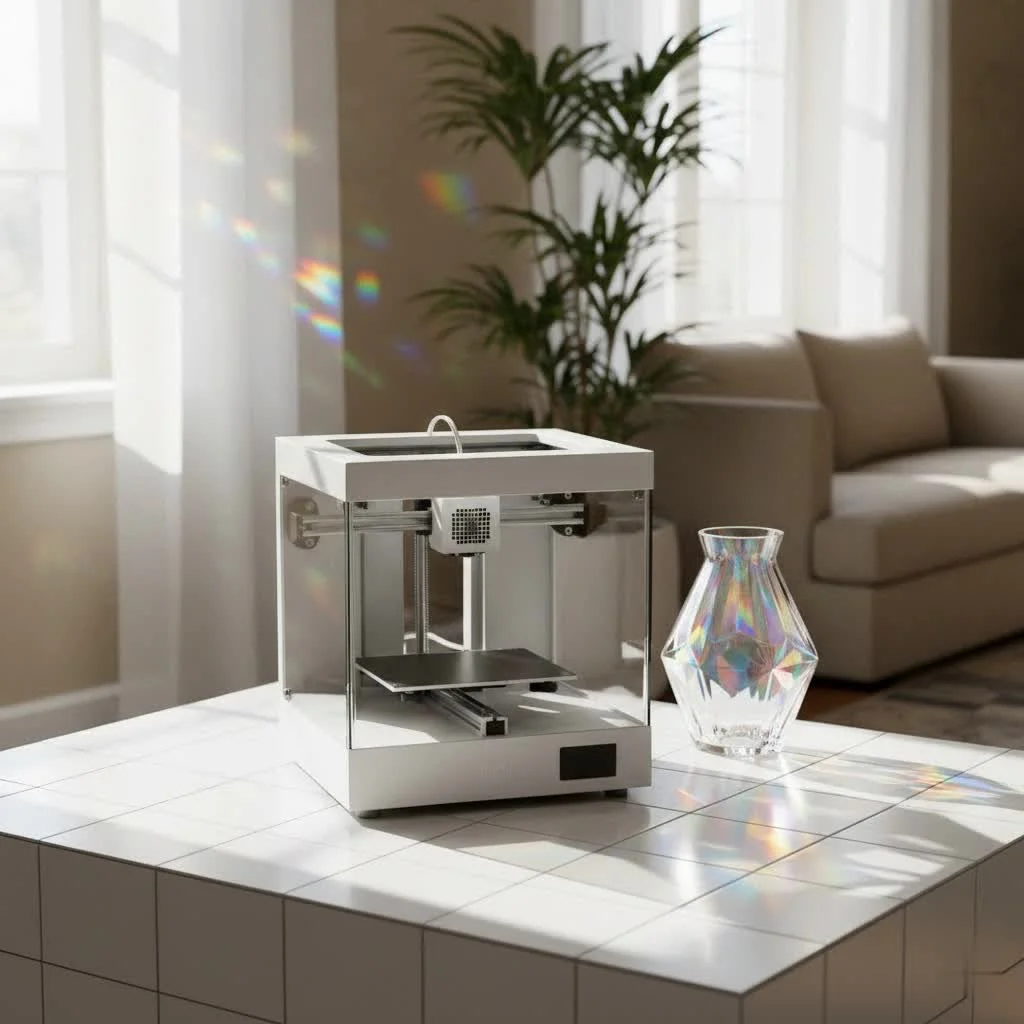
A MakerBot 3D printer is a Fused Deposition Modeling (FDM) machine designed for accessibility and reliability, catering to hobbyists, educators, and professionals. Since its founding in 2009, MakerBot has developed several key series, including the Replicator for desktop use, the Method for industrial-grade precision, and the Sketch for educational settings, all leveraging proprietary software and Smart Extruder technology for consistent results.
A Legacy of Innovation: The MakerBot Journey
Born in a Brooklyn workshop in 2009, MakerBot quickly became synonymous with desktop 3D printing. The company’s vision was clear: to put a 3D printer in every home and classroom, making digital fabrication a reality for the masses. This pioneering spirit led to the development of user-friendly machines that lowered the barrier to entry for countless enthusiasts. In 2013, MakerBot joined forces with Stratasys, a global leader in industrial 3D printing, a move that bolstered its capabilities and allowed for the integration of more advanced technologies into its product lines. This partnership cemented MakerBot’s position as a significant player, continuously pushing the boundaries of what a desktop MakerBot 3D printer can achieve. For shop curated 3d printing on this site.
Exploring the MakerBot Ecosystem: Key Printer Models
MakerBot offers a diverse range of 3D printers, each tailored to specific needs, from entry-level hobbyists to demanding industrial applications. Understanding the distinctions between these models is key to choosing the perfect MakerBot 3D printer for your endeavors.
The Classic Replicator Series: Desktop Workhorses
The Replicator series is where many users first encountered MakerBot. Models like the Replicator 2, the 5th Generation Replicator, and the Replicator+ were designed with ease of use and reliability in mind. They primarily utilize Fused Deposition Modeling (FDM) technology, melting and extruding plastic filament layer by layer to build your designs.
The original Replicator models were celebrated for their straightforward setup, smooth operation, and decent print quality, often featuring multiple connectivity options like USB, Ethernet, and Wi-Fi. Many also included the innovative Smart Extruder+, an interchangeable component designed to detect filament absence and simplify maintenance. While earlier generations faced some challenges, especially regarding extruder reliability and being somewhat limited to PLA filament, the Replicator+ introduced significant improvements, including a flexible build plate with a “Grip Surface” for better adhesion, faster motors, and enhanced software, making it a reliable choice for educational settings and passionate hobbyists.
Stepping Up to Professional Grade: The MakerBot Method Series
For those who demand industrial-level precision and performance on their desktop, the MakerBot Method series (including the Method, Method X, and Carbon Fiber Editions) is a major upgrade. These machines bridge the gap between desktop convenience and industrial manufacturing.
What sets the Method series apart is its actively heated build chamber, capable of reaching up to 60°C. This controlled environment significantly reduces warping and improves layer adhesion, resulting in parts with higher dimensional accuracy and superior strength. The Method also features dual performance extruders, allowing for complex geometries with dissolvable supports, and has dry-sealed material bays to ensure filament quality. “The Method series truly brings high-performance engineering to your desk,” notes Dr. Evelyn Reed, a renowned additive manufacturing specialist and former MakerBot lead engineer. “It’s built for prototyping functional parts with confidence.” With compatibility for a wider range of engineering materials like PETG, PVA, and even carbon fiber composites (on specific models), the Method series is ideal for rapid prototyping, functional testing, and creating durable end-use parts in professional environments.
Empowering Education: The MakerBot Sketch Series
|
Our Picks for the Best 3D Printer in 2026
As an Amazon Associate I earn from qualifying purchases.
|
||
| Num | Product | Action |
|---|---|---|
| 1 | FLASHFORGE Adventurer 5M Pro 3D Printer with 1 Click Auto Printing System, 600mm/s High-Speed, Quick Detachable 280°C Nozzle, Core XY All-Metal Structure, Multi-Functional 220x220x220mm 3D Printer |

|
| 2 | FLASHFORGE Adventurer 5M 3D Printer with Fully Auto Leveling, Max 600mm/s High Speed Printing, 280°C Direct Extruder with 3S Detachable Nozzle, CoreXY All Metal Structure, Print Size 220x220x220mm |
|
| 3 | Anycubic Multicolor 3D Printer, Kobra S1 Combo Core XY Stable Structure with Sealed Printing High Precision 600mm/s Fast Speed Auto Calibration Ideal for Precision and Efficiency 9.8\"x9.8\"x9.8\" |
|
| 4 | FLASHFORGE AD5M 3D Printer Fully Auto Calibration Print with 1-Click Max 600mm/s Speed, All-Metal CoreXY Structure Precise Printing, Easy-Maintenance Quick-Swap Nozzle, Print Size 220x220x220mm |
|
| 5 | Creality K2 SE Combo 3D Printer, Support Multicolor Printing with CFS, 500mm/s High-Speed, Smart Auto Leveling, Solid Metal Build Frame, Fully Assembled, Next-Gen Extruder, 220×215×245 mm Build Volume |
|
| 6 | Creality Ender 3 V3 SE 3D Printer, 250mm/s Faster Print Speed CR Touch Auto Leveling Sprite Direct Extruder Dual Z-Axis Auto Filament Loading Ender 3 Upgrade 3D Printer Print Size 8.66x8.66x9.84 inch |
|
| 7 | FLASHFORGE AD5X Multi-Color 3D Printer, CoreXY 600mm/s High-Speed, 1-Click Auto Leveling, 300°C Direct Drive Extruder, 220x220x220mm Build Volume, Ideal for Precision and Efficiency |
|
| 8 | FLASHFORGE AD5M Pro 3D Printer 600mm/s High Speed & Precision, Full-Auto Calibration with 0.4&0.6mm Nozzle Bundle, CoreXY Structure & Auxiliary Chamber Cooling, ≤50 dB Quite Printing Camera Printers |
|
| 9 | FLASHFORGE AD5X Multi-Color 3D Printer 4 Colors with IFS, Fully Auto Leveling FDM 3D Printer with Max 600mm/s High Speed Printing and Max 300°C Nozzle, Large Printing Size 220 * 220 * 220mm |
|
| 10 | FLASHFORGE AD5X Multi-Color 3D Printer with IFS, 600mm/s High Speed, 300°C High Temp Direct Extruder, Fully Auto Leveling, All Metal CoreXY,4-Color Printing for PLA-CF,PETG-CF, 220x220x220mm |
|
Recognizing the immense potential of 3D printing in education, MakerBot introduced the Sketch series. These printers are specifically designed for the classroom, offering a “tinker-free” experience that allows students and teachers to focus on learning and creativity rather than troubleshooting.
The Sketch and Sketch Large Classroom bundles come equipped with everything needed for a robust STEAM education program, including certifications and lesson plans. Key features include cloud-based management for easy print queueing, remote monitoring, and safety-conscious design. The Sketch series primarily uses MakerBot’s PLA and Tough PLA materials, which are non-toxic and easy to print, minimizing issues like warping or curling. This focus on reliability, curriculum integration, and a seamless user experience makes the MakerBot Sketch 3D printer an invaluable tool for inspiring the next generation of innovators.
Core Technologies and User Experience
At the heart of every MakerBot 3D printer are technologies designed to deliver a smooth and effective printing experience.
The Power of FDM Technology
All MakerBot printers primarily utilize Fused Deposition Modeling (FDM), a widely adopted additive manufacturing process. FDM works by extruding a thermoplastic filament through a heated nozzle, depositing it layer by layer onto a build plate to construct a 3D object. MakerBot has refined this technology to ensure consistent results, from intricate details to larger, more robust prints.
Intuitive Software: MakerBot Print and CloudPrint
A significant strength of the MakerBot ecosystem is its user-friendly software. MakerBot Print and the cloud-based MakerBot CloudPrint offer seamless integration with your printer. This software allows you to prepare models, monitor print progress remotely via onboard cameras (available on many models), and manage multiple printers from a single dashboard. While MakerBot’s closed-system approach means it doesn’t typically support third-party slicers like Cura, its proprietary software is often lauded for its advanced features and ease of navigation, making the entire workflow more efficient.
Smart Extruders and Build Plates
The Smart Extruder+ is a hallmark of many MakerBot printers, offering quick-swap capabilities and improved reliability. It’s designed to detect filament jams and even notify you when filament runs out, minimizing failed prints. Many modern MakerBot printers also feature flexible and magnetic build plates with specialized “Grip Surfaces,” which greatly enhance print adhesion during printing and make removing finished objects a breeze.
Material Versatility (and Limitations)
MakerBot’s commitment to print quality extends to its materials. While earlier Replicator models were primarily limited to PLA, newer professional-grade printers like the Method series offer broader material compatibility. These can handle engineering-grade filaments such as Tough PLA, PETG, PVA (for dissolvable supports), and even carbon fiber composites, opening up a world of possibilities for stronger, more durable parts. It’s while some third-party PLA filaments can be used with certain MakerBot printers, performance is often optimized when using MakerBot-branded materials.
Common Questions and Troubleshooting Tips for Your MakerBot 3D Printer
Even with advanced technology, questions and minor hiccups can arise. Here are answers to some common inquiries about MakerBot 3D printer usage and troubleshooting.
Why isn’t my print sticking to the build plate?
Print adhesion issues are common. Ensure your build plate is properly calibrated and level. Many MakerBot models feature assisted or automatic leveling, which simplifies this process. If your printer has a Grip Surface, make sure it’s clean. For older models or stubborn prints, applying a thin layer of glue stick to the build plate can significantly improve adhesion.
How do I fix a clogged extruder?
MakerBot’s Smart Extruder+ is designed to be more robust against clogs, but they can still happen. Often, a “cold pull” or using the printer’s built-in maintenance routines can clear minor blockages. For persistent clogs in a Smart Extruder+, some experienced users may carefully disassemble the extruder to remove jammed filament, though this should only be attempted if you are comfortable with the process and understand potential warranty implications. Keeping your filament dry and feeding smoothly can prevent many clogs.
What are common software errors?
Slicing errors can occur if your 3D model has issues (e.g., non-manifold edges). Always inspect your models in the software before printing. For connection issues, especially with older Replicator models, printing directly from a USB stick or using Wi-Fi (if available) can be more reliable than a USB cable connection, which can sometimes be interrupted by computer processes.
Can I use third-party filaments?
The ability to use third-party filaments varies by MakerBot 3D printer model. The Method series, particularly with an experimental extruder, is more open to a wider range of third-party engineering materials. For Replicator series printers, while it’s possible to use third-party PLA, performance may not be guaranteed, and you might need user-created print modes or custom settings to achieve optimal results. It’s always best to check your printer’s specifications and user community resources for recommendations.
Choosing the Right MakerBot for Your Needs
Selecting the ideal MakerBot 3D printer comes down to your specific requirements. Consider your budget, the primary application (hobby, education, professional prototyping), the types of materials you need to print with, and your desired build volume.
- For educators and schools, the MakerBot Sketch 3D printer offers a complete, easy-to-manage solution with robust curriculum support.
- For hobbyists and small workshops seeking reliability and ease of use, a MakerBot Replicator+ 3D printer could be an excellent entry point.
- For engineers and product designers demanding precision, functional prototyping, and material versatility, the MakerBot Method X Carbon Fiber Edition or other Method series printers are designed to meet those rigorous demands.
Each MakerBot 3D printer provides a gateway to innovation, built on a foundation of user-centric design and technological advancement.
Embrace the Future of Creation with MakerBot
From empowering classrooms to accelerating professional prototyping, MakerBot has consistently delivered powerful and accessible 3D printing solutions. Their journey from a desktop pioneer to a provider of industrial-grade machines showcases a commitment to making additive manufacturing a reality for everyone. Whether you’re taking your first steps into 3D printing or pushing the boundaries of professional design, a MakerBot 3D printer offers a reliable platform to bring your ideas to life. What will you create next? Share your MakerBot 3D printing experiences with us!
Frequently Asked Questions
What are the main MakerBot 3D printer series available?
MakerBot offers three primary series: the Replicator series for desktop use, the Method series for professional and industrial applications, and the Sketch series, specifically designed for educational environments. Each series caters to different user needs and technical requirements.
How does MakerBot's FDM technology ensure consistent print quality?
MakerBot refines Fused Deposition Modeling (FDM) technology by extruding thermoplastic filament through a heated nozzle layer by layer. This process, combined with features like the Smart Extruder+ and specialized build plates, ensures consistent results for both intricate details and robust prints.
What software does MakerBot provide for managing 3D prints?
MakerBot provides user-friendly software called MakerBot Print and the cloud-based MakerBot CloudPrint. These platforms allow users to prepare models, monitor print progress remotely via onboard cameras, and manage multiple printers efficiently from a single dashboard.
Can I use third-party filaments with my MakerBot 3D printer?
The ability to use third-party filaments varies by MakerBot 3D printer model. The Method series is more open to a wider range of third-party engineering materials, especially with an experimental extruder. For Replicator series printers, while possible with PLA, optimal performance is often achieved with MakerBot-branded materials.
What should I do if my 3D print isn't sticking to the build plate?
If your print isn't sticking, ensure your build plate is properly calibrated and level. Many MakerBot models offer assisted or automatic leveling. Cleaning the Grip Surface, if present, or applying a thin layer of glue stick for older models can significantly improve adhesion.
Get our weekly buyer guide
Practical specs, not advice. Unsubscribe anytime.
The Smart Extruder technology on my MakerBot Method is a game-changer for consistency. I’ve noticed a significant reduction in clogs and print errors compared to other printers I’ve used. While it’s a bit of an investment, the industrial-grade precision really pays off for detailed prototypes.
We got a MakerBot Sketch for our school’s STEM program, and it’s mostly good for the students. However, the proprietary software can be a bit restrictive at times, making it harder to use some open-source designs. It’s still a solid choice for education, but I wish there was more flexibility.
My MakerBot has been fantastic for creating custom parts for my robotics club. The Fused Deposition Modeling works flawlessly, and the parts come out strong and accurate every time. It’s made a huge difference in how quickly we can iterate on our designs.
I’ve been using a MakerBot Replicator for my personal projects for years now, and it’s been incredibly reliable. The print quality is consistently excellent, and I rarely have any issues with failed prints. It’s definitely a workhorse for anyone serious about desktop 3D printing.