An aluminum 3D printer is a transformative technology that builds strong, lightweight metal parts layer by layer from powdered aluminum alloys, primarily using Laser Powder Bed Fusion (LPBF) or Electron Beam Melting (EBM). This additive manufacturing process enables the creation of complex geometries and intricate designs previously impossible with traditional methods, leading to significant advancements in aerospace, automotive, and electronics industries.
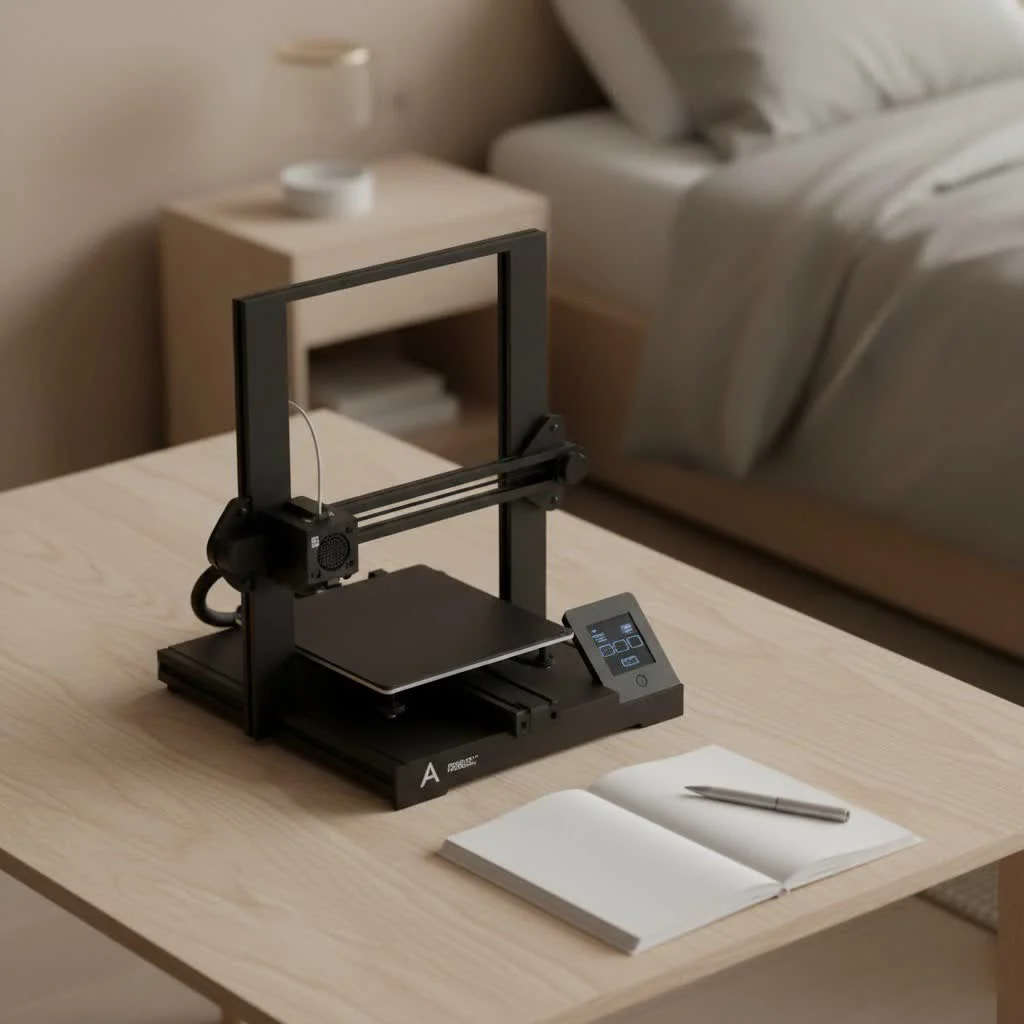
As experts with over 15 years in additive manufacturing, we at WMTSV.com are here to demystify this powerful technology, guiding you through the ins and outs of aluminum 3D printing, its profound advantages, and the exciting applications shaping our world. Get ready to dive deep into a realm where lightweight meets robust, and intricate designs come to life. For 3d printing buying guides on this site.
What Exactly is Aluminum 3D Printing?
At its core, aluminum 3D printing is a specialized form of additive manufacturing that builds metal parts layer by painstaking layer from a digital design. Unlike traditional subtractive methods that cut away material from a larger block, 3D printing only uses the necessary material, leading to significant waste reduction. When we talk about an aluminum 3D printer, we’re primarily referring to the sophisticated machines and processes designed to work with powdered aluminum alloys, fusing them together to create functional, high-performance components.
The most prevalent technologies in this space are Laser Powder Bed Fusion (LPBF), often called Selective Laser Melting (SLM), and Electron Beam Melting (EBM). Both employ powerful energy sources—lasers or electron beams—to precisely melt and solidify thin layers of aluminum powder, building the part from the ground up. While less common for pure aluminum, some Fused Deposition Modeling (FDM) systems can utilize aluminum composite filaments or wires, and Binder Jetting also offers another path to producing aluminum components. Each method brings its own strengths, but LPBF and EBM stand out for their ability to achieve the precision and material integrity demanded by industrial applications.
The Unmatched Advantages of 3D Printing with Aluminum
Why are so many industries turning to the aluminum 3D printer? The benefits are multifaceted, offering solutions that traditional manufacturing simply can’t match.
Lightweight Strength, Redefined
Aluminum is naturally celebrated for its impressive strength-to-weight ratio. When combined with the capabilities of 3D printing, this property is elevated. Engineers can design parts that are dramatically lighter without compromising structural integrity, making it invaluable for applications where every gram counts. This inherent characteristic translates directly into improved fuel efficiency for vehicles and aircraft, and enhanced performance for moving parts.
Unleashing Design Freedom
Traditional manufacturing methods often impose significant design constraints. Not so with an aluminum 3D printer. This technology liberates designers, allowing them to create incredibly complex geometries, intricate internal channels, and weight-saving lattice structures that would be impossible or prohibitively expensive to produce conventionally. Think of cooling channels precisely routed within a component, or multi-part assemblies consolidated into a single, stronger unit—all thanks to the flexibility of additive manufacturing. This design freedom not only optimizes performance but also simplifies assembly and reduces part count.
Material Efficiency and Reduced Waste
|
Our Picks for the Best 3D Printer in 2026
As an Amazon Associate I earn from qualifying purchases.
|
||
| Num | Product | Action |
|---|---|---|
| 1 | FLASHFORGE Adventurer 5M 3D Printer with Fully Auto Leveling, Max 600mm/s High Speed Printing, 280°C Direct Extruder with 3S Detachable Nozzle, CoreXY All Metal Structure, Print Size 220x220x220mm |

|
| 2 | FLASHFORGE AD5M 3D Printer Fully Auto Calibration Print with 1-Click Max 600mm/s Speed, All-Metal CoreXY Structure Precise Printing, Easy-Maintenance Quick-Swap Nozzle, Print Size 220x220x220mm |
|
| 3 | FLASHFORGE AD5X Multi-Color 3D Printer, CoreXY 600mm/s High-Speed, 1-Click Auto Leveling, 300°C Direct Drive Extruder, 220x220x220mm Build Volume, Ideal for Precision and Efficiency |
|
| 4 | FLASHFORGE AD5X Multi-Color 3D Printer 4 Colors with IFS, Fully Auto Leveling FDM 3D Printer with Max 600mm/s High Speed Printing and Max 300°C Nozzle, Large Printing Size 220 * 220 * 220mm |
|
| 5 | Anycubic Multicolor 3D Printer, Kobra S1 Combo Core XY Stable Structure with Sealed Printing High Precision 600mm/s Fast Speed Auto Calibration Ideal for Precision and Efficiency 9.8\"x9.8\"x9.8\" |
|
| 6 | FLASHFORGE AD5M Pro 3D Printer 600mm/s High Speed & Precision, Full-Auto Calibration with 0.4&0.6mm Nozzle Bundle, CoreXY Structure & Auxiliary Chamber Cooling, ≤50 dB Quite Printing Camera Printers |
|
| 7 | FLASHFORGE Adventurer 5M Pro 3D Printer with 1 Click Auto Printing System, 600mm/s High-Speed, Quick Detachable 280°C Nozzle, Core XY All-Metal Structure, Multi-Functional 220x220x220mm 3D Printer |
|
| 8 | Creality Ender 3 V3 SE 3D Printer, 250mm/s Faster Print Speed CR Touch Auto Leveling Sprite Direct Extruder Dual Z-Axis Auto Filament Loading Ender 3 Upgrade 3D Printer Print Size 8.66x8.66x9.84 inch |
|
| 9 | FLASHFORGE AD5X Multi-Color 3D Printer with IFS, 600mm/s High Speed, 300°C High Temp Direct Extruder, Fully Auto Leveling, All Metal CoreXY,4-Color Printing for PLA-CF,PETG-CF, 220x220x220mm |
|
| 10 | Creality K2 SE Combo 3D Printer, Support Multicolor Printing with CFS, 500mm/s High-Speed, Smart Auto Leveling, Solid Metal Build Frame, Fully Assembled, Next-Gen Extruder, 220×215×245 mm Build Volume |
|
Working with expensive, high-performance metals like aluminum means waste can quickly drive up costs. An aluminum 3D printer operates on an additive principle, meaning it only uses the exact amount of material needed for the part. Excess powder can often be collected and reused, significantly minimizing waste and improving overall cost-effectiveness, especially for complex designs. This makes the process not just efficient but also more sustainable.
Beyond the Basics: Corrosion and Conductivity
Aluminum alloys boast excellent chemical resistance, making them ideal for parts exposed to harsh environments. Furthermore, 3D printed aluminum exhibits impressive thermal and electrical conductivity. These properties make it a prime choice for components that need to manage heat effectively, like heat sinks, or conduct electricity efficiently, opening up new possibilities for electronics and specialized industrial machinery.
Speed and Cost-Effectiveness
For prototyping, custom parts, and low-volume production runs, an aluminum 3D printer offers undeniable speed and cost advantages. It eliminates the need for expensive and time-consuming tooling and molds associated with traditional processes like casting or machining. This agility allows for faster design iterations, quicker market entry for new products, and on-demand production of unique or replacement parts, ultimately accelerating innovation.
Popular Aluminum Alloys for 3D Printing
While aluminum is the star, the specific alloy plays a crucial role in the final part’s properties. Here are some of the most common and modern alloys utilized by the aluminum 3D printer:
- AlSi10Mg: This is arguably the most widely used aluminum alloy in additive manufacturing. It’s an age-strengthened alloy known for its excellent hardness, strength, and dynamic toughness, mirroring properties found in traditional casting alloys. Parts printed with AlSi10Mg exhibit high corrosion resistance and impressive mechanical strength.
- AlSi7Mg: Featuring aluminum, silicon, and a small amount of magnesium, this alloy offers high strength and is often employed in structural components for demanding sectors like aerospace and automotive. Its lightweight nature combined with strong dynamic load-bearing capability makes it highly valuable.
- Al6061 and Al7075: Historically challenging for additive manufacturing, advancements are now enabling successful 3D printing with these popular alloys. Al6061 provides good mechanical strength and excellent corrosion resistance, while Al7075 is renowned as one of the strongest aluminum alloys, with strength comparable to some steels, making it ideal for high-load applications.
- Emerging Alloys (e.g., EOS Aluminium Al2139 AM): The field is constantly evolving. Researchers are developing new aluminum alloys, such as those engineered by Nagoya University, specifically for additive manufacturing to offer enhanced performance at elevated temperatures, like 300°C. These innovations are crucial for pushing the boundaries of aluminum 3D printing in extreme environments.
Where Aluminum 3D Printing Shines: Key Applications
The versatility of the aluminum 3D printer has led to its widespread adoption across a multitude of industries, each leveraging its unique benefits.
Aerospace Industry
For aerospace, weight reduction is paramount. Aluminum 3D printing enables the creation of incredibly lightweight yet robust components such as engine parts, intricate brackets, and crucial fuselage elements. Both Boeing and Airbus actively use 3D printed aluminum parts in their aircraft and satellites, leading to lighter airframes, improved fuel efficiency, and extended flight ranges. Some communication satellites contain hundreds of additively manufactured aluminum parts.
Automotive Sector
In the automotive world, the drive for fuel efficiency and reduced emissions makes aluminum 3D printing a perfect fit. Manufacturers are producing lightweight engine parts, optimized exhaust systems, and custom components for high-performance vehicles. Porsche, for instance, has utilized 3D printed aluminum pistons in its GT2 RS, adding horsepower and improving efficiency. Mercedes-Benz also employs this technology for manufacturing replacement parts, ensuring vehicle safety and extending the life of older models.
Electronics
The excellent thermal properties of 3D printed aluminum make it ideal for heat sinks, casings, and other electronic components that require efficient heat dissipation to maintain optimal performance and longevity.
Consumer Goods
From lightweight drone bodies and robust bike frames to durable outdoor gear, aluminum 3D printer technology is finding its way into consumer products where strength, light weight, and complex aesthetics are desired.
Medical Devices & Prototyping
For bespoke medical implants and instruments, or for rapid prototyping and low-volume production across various sectors, aluminum 3D printing offers unparalleled customization and speed, drastically cutting down development cycles and costs.
Overcoming Challenges in Aluminum 3D Printing
While immensely powerful, 3D printing with aluminum isn’t without its intricacies. The welding behavior of aluminum alloys during the process demands deep expertise to ensure optimal microstructure, minimize porosity, and achieve desired material properties. Precise control over factors like laser power, scan speed, and layer thickness, along with careful consideration of support structures, is critical. While new alloys are emerging, traditional aluminum can lose strength at very high temperatures, a challenge that ongoing research is actively addressing.
Post-Processing: Refining Your 3D Printed Aluminum Parts
Once a part emerges from the aluminum 3D printer, post-processing is often essential to achieve its final form, functional accuracy, and desired surface finish.
- Polishing: Creates a smooth, reflective surface, often chosen for aesthetic reasons or to minimize friction in functional components.
- Tumbling: An abrasive process that smooths rough edges and provides an even, matte finish, particularly useful for intricate geometries.
- CNC Machining: This traditional method is often employed to refine critical dimensions, achieving exceptionally tight tolerances for features like threads, holes, or mating surfaces. It ensures the part meets exact specifications.
- Painting: Applying paint adds both a protective layer and aesthetic appeal, offering specific colors or finishes while enhancing corrosion resistance and durability for exposed parts.
“The true magic of the aluminum 3D printer isn’t just in printing metal, it’s in revolutionizing how we think about design and material capabilities. We’re no longer bound by traditional manufacturing limits; instead, we’re crafting parts that are smarter, lighter, and fundamentally more efficient.” — Ava Chen, Senior Additive Manufacturing Engineer at WMTSV.com.
The Future is Lightweight: Why Aluminum 3D Printing is Here to Stay
The capabilities of the aluminum 3D printer are constantly expanding, driven by advancements in material science, machine technology, and application innovation. The ability to produce strong, lightweight, corrosion-resistant, and thermally conductive parts with unparalleled design freedom makes this technology indispensable for sectors demanding peak performance. As costs decrease and accessibility increases, we can expect aluminum 3D printing to move beyond specialized industrial applications and become an even more pervasive force in manufacturing. It’s an exciting time to be involved in 3D printing, and aluminum is at the forefront of this revolution.
We encourage you to explore how this incredible technology can improve your projects. Share your experiences, challenges, and successes with aluminum 3D printing in the comments below!
Frequently Asked Questions
Q1: What are the main benefits of using an aluminum 3D printer?
A1: The main benefits include creating lightweight parts with high strength-to-weight ratios, enabling complex geometries and part consolidation, offering material efficiency, and providing excellent corrosion resistance and thermal conductivity.
Q2: What kind of parts can be made with aluminum 3D printing?
A2: A wide array of parts can be made, from aerospace components like engine brackets and satellite parts, to automotive elements such as pistons and heat exchangers, and even custom designs for electronics and consumer goods.
Q3: Which 3D printing technologies are commonly used for aluminum?
A3: The most common industrial technologies are Laser Powder Bed Fusion (LPBF), also known as Selective Laser Melting (SLM), and Electron Beam Melting (EBM). Binder Jetting and some FDM systems also support aluminum.
Q4: What aluminum alloys are suitable for 3D printing?
A4: AlSi10Mg is the most common, but AlSi7Mg, Al6061, Al7075, and specialized high-temperature alloys like EOS Aluminium Al2139 AM are also being increasingly used and developed.
Q5: Is aluminum 3D printing more expensive than traditional manufacturing?
A5: For low-volume production, prototyping, and highly complex parts, aluminum 3D printing can be more cost-effective due to reduced material waste and the elimination of expensive tooling. For very high-volume simple parts, traditional methods might still be cheaper.
Q6: How does 3D printing improve the properties of aluminum parts?
A6: 3D printing allows for unique microstructures and internal designs that can enhance mechanical properties like strength, ductility, and even resistance to higher temperatures compared to some conventionally manufactured aluminum parts.
Q7: What post-processing steps are typically needed for 3D printed aluminum?
A7: Common post-processing techniques include polishing for surface finish, tumbling for smoothing edges, CNC machining for critical dimensional accuracy, and painting for aesthetics and added protection.
Frequently Asked Questions
What are the primary advantages of using an aluminum 3D printer?
The primary advantages of using an aluminum 3D printer include the ability to create lightweight parts with superior strength-to-weight ratios, unparalleled design freedom for complex geometries, and significant material efficiency. Additionally, 3D printed aluminum offers excellent corrosion resistance and high thermal and electrical conductivity, making it suitable for diverse applications.
Which specific aluminum alloys are commonly used for 3D printing?
The most common aluminum alloy for 3D printing is AlSi10Mg, known for its hardness and strength. Other frequently used alloys include AlSi7Mg for structural components, and increasingly, Al6061 and Al7075 for high-load applications. Emerging alloys like EOS Aluminium Al2139 AM are also being developed for enhanced performance at elevated temperatures, such as 300u00b0C.
What industries benefit most from aluminum 3D printing technology?
Industries that benefit most from aluminum 3D printing include aerospace, automotive, and electronics. Aerospace leverages it for lightweight engine parts and brackets to improve fuel efficiency. The automotive sector uses it for optimized engine components and custom parts, like Porsche's GT2 RS pistons. Electronics benefits from its thermal properties for heat sinks and casings.
How does 3D printing aluminum compare to traditional manufacturing methods?
For prototyping, custom parts, and low-volume production, 3D printing aluminum offers significant speed and cost advantages over traditional manufacturing. It eliminates the need for expensive tooling and molds, reduces material waste by only using necessary material, and allows for faster design iterations. However, for very high-volume simple parts, traditional methods might still be more cost-effective.
What post-processing steps are typically required for 3D printed aluminum components?
After a part is 3D printed, several post-processing steps are often essential. These include polishing to create a smooth, reflective surface, tumbling to smooth rough edges and provide an even finish, and CNC machining to refine critical dimensions and achieve tight tolerances. Painting can also be applied for aesthetic appeal, added protection, and enhanced corrosion resistance.
Can aluminum 3D printing create parts with improved material properties?
Yes, aluminum 3D printing can create parts with improved material properties compared to some conventionally manufactured aluminum components. The additive process allows for unique microstructures and internal designs, which can enhance mechanical properties such as strength, ductility, and even resistance to higher temperatures. This enables the creation of parts optimized for specific performance requirements.
Get our weekly buyer guide
Practical specs, not advice. Unsubscribe anytime.

I’ve been looking into metal 3D printing for a while, and the explanation of Laser Powder Bed Fusion really clarified things for me. The ability to create such complex geometries for aerospace parts is a game-changer. My company is seriously considering investing in this technology for prototyping.
While the benefits for industries like automotive are clear, I wish there was more discussion about the initial cost of these machines. It feels like a huge barrier to entry for smaller businesses, even with the long-term advantages. The EBM process sounds promising but the investment is significant.
The details on how aluminum 3D printing enables lightweight yet robust parts were super helpful. I’m a hobbyist, so a full industrial setup is out of my league, but it’s inspiring to see what’s possible. I’m hoping to see more accessible options for smaller-scale projects in the future.
This really broke down the ‘what exactly is aluminum 3D printing’ question perfectly. Understanding how it uses powdered aluminum alloys to build layer by layer makes so much sense now. It’s incredible how this technology is transforming manufacturing.