Mastering 3D printer designs involves understanding both the intricate engineering of the machines themselves and the crucial art of crafting optimal digital models for these machines. There are seven main categories of 3D printing technologies, including Material Extrusion (FDM), Vat Polymerization (SLA, DLP, LCD), and Powder Bed Fusion (SLS, DMLS, EBM), each with unique strengths. Key design principles for models include ensuring adequate wall thickness (e.g., 0.8 mm for most methods), managing overhangs (ideally under 45 degrees), and selecting appropriate materials for specific applications.
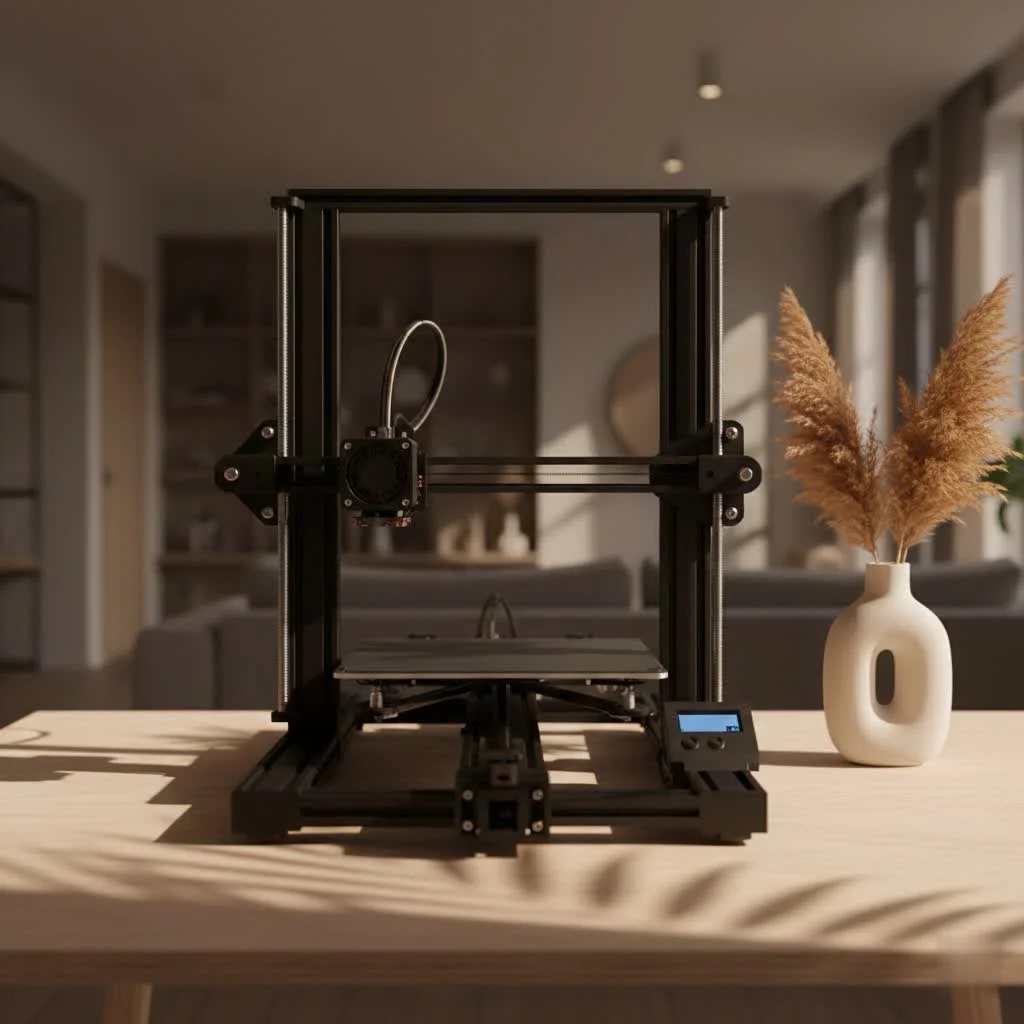
The Core Architectures: Understanding Different 3D Printer Designs (Machines)
At its heart, 3D printing, or additive manufacturing, builds objects layer by layer. The method of layer formation and the materials used vary dramatically across different printer designs. The International Organization for Standardization (ISO) classifies these methods into seven main categories, each with unique strengths and ideal applicationsLet’s examine the most common and impactful ones. For compare top 3d printing on this site.
Material Extrusion (FDM/FFF)
Material Extrusion, commonly known as Fused Deposition Modeling (FDM) or Fused Filament Fabrication (FFF), works by extruding a thermoplastic filament (like PLA or ABS) through a heated nozzle, depositing it layer by layer onto a build platform.
Why it’s popular: FDM printers are often the most user-friendly and cost-effective entry point into 3D printing, making them a favorite among hobbyists and for rapid prototyping.
Where it has limits: FDM parts can have a relatively rough surface finish and may lack the strength required for highly demanding functional components.
Vat Polymerization (SLA, DLP, LCD)
Vat Polymerization methods, including Stereolithography (SLA), Digital Light Processing (DLP), and Liquid Crystal Display (LCD) printing, cure liquid photopolymer resin using a light source.
The magic of precision: SLA printers are renowned for producing parts with exceptional detail, incredibly smooth surfaces, and tight tolerances, making them ideal for medical models, jewelry, and intricate prototypes. DLP printers offer faster build speeds by projecting an entire layer simultaneously.
Things to : Parts created with vat polymerization often require support structures during printing and can be more brittle than those produced with other methods.
Powder Bed Fusion (SLS, DMLS, EBM)
Powder Bed Fusion (PBF) technologies, including Selective Laser Sintering (SLS), Direct Metal Laser Sintering (DMLS), and Electron Beam Melting (EBM), use a laser or electron beam to selectively fuse powdered material (plastics or metals) layer by layer.
Engineered for strength: SLS parts, made from real thermoplastic, are highly durable and don’t require support structures. DMLS and EBM create metal components as dense and strong as those made with traditional manufacturing, often used in aerospace and medical implants.
Considerations: While incredibly versatile, SLS parts can have a rougher surface finish compared to resin prints, and PBF technologies generally involve higher costs.
Material Jetting (PolyJet)
Material Jetting, with PolyJet being a prominent example, dispenses tiny droplets of liquid photopolymer resin that are immediately cured by UV light.
Versatility in color and material: A unique advantage of Material Jetting is its ability to fabricate parts with multiple properties, including different colors and materials within a single print. This makes it excellent for prototyping elastomeric or overmolded parts.
Other Notable Designs
Beyond these core technologies, other innovative 3D printer designs include:
- Binder Jetting: Binds powdered materials (metal, sand, ceramics) with a liquid agent without heat or light, suitable for high-volume production and large-scale parts.
- Direct Energy Deposition (DED): Uses a focused thermal energy source to melt and fuse materials as they are deposited, often used for repairing existing high-value components.
- Sheet Lamination: Bonds thin sheets of material (paper, plastic, metal foil) together, then cuts them into shape.
Designing for Success: Optimizing Your 3D Models
|
Our Picks for the Best 3D Printer in 2026
As an Amazon Associate I earn from qualifying purchases.
|
||
| Num | Product | Action |
|---|---|---|
| 1 | FLASHFORGE AD5M 3D Printer Fully Auto Calibration Print with 1-Click Max 600mm/s Speed, All-Metal CoreXY Structure Precise Printing, Easy-Maintenance Quick-Swap Nozzle, Print Size 220x220x220mm |

|
| 2 | FLASHFORGE AD5X Multi-Color 3D Printer, CoreXY 600mm/s High-Speed, 1-Click Auto Leveling, 300°C Direct Drive Extruder, 220x220x220mm Build Volume, Ideal for Precision and Efficiency |
|
| 3 | Anycubic Multicolor 3D Printer, Kobra S1 Combo Core XY Stable Structure with Sealed Printing High Precision 600mm/s Fast Speed Auto Calibration Ideal for Precision and Efficiency 9.8\"x9.8\"x9.8\" |
|
| 4 | Creality K2 SE Combo 3D Printer, Support Multicolor Printing with CFS, 500mm/s High-Speed, Smart Auto Leveling, Solid Metal Build Frame, Fully Assembled, Next-Gen Extruder, 220×215×245 mm Build Volume |
|
| 5 | FLASHFORGE AD5X Multi-Color 3D Printer with IFS, 600mm/s High Speed, 300°C High Temp Direct Extruder, Fully Auto Leveling, All Metal CoreXY,4-Color Printing for PLA-CF,PETG-CF, 220x220x220mm |
|
| 6 | FLASHFORGE AD5X Multi-Color 3D Printer 4 Colors with IFS, Fully Auto Leveling FDM 3D Printer with Max 600mm/s High Speed Printing and Max 300°C Nozzle, Large Printing Size 220 * 220 * 220mm |
|
| 7 | Creality Ender 3 V3 SE 3D Printer, 250mm/s Faster Print Speed CR Touch Auto Leveling Sprite Direct Extruder Dual Z-Axis Auto Filament Loading Ender 3 Upgrade 3D Printer Print Size 8.66x8.66x9.84 inch |
|
| 8 | FLASHFORGE Adventurer 5M 3D Printer with Fully Auto Leveling, Max 600mm/s High Speed Printing, 280°C Direct Extruder with 3S Detachable Nozzle, CoreXY All Metal Structure, Print Size 220x220x220mm |
|
| 9 | FLASHFORGE AD5M Pro 3D Printer 600mm/s High Speed & Precision, Full-Auto Calibration with 0.4&0.6mm Nozzle Bundle, CoreXY Structure & Auxiliary Chamber Cooling, ≤50 dB Quite Printing Camera Printers |
|
| 10 | FLASHFORGE Adventurer 5M Pro 3D Printer with 1 Click Auto Printing System, 600mm/s High-Speed, Quick Detachable 280°C Nozzle, Core XY All-Metal Structure, Multi-Functional 220x220x220mm 3D Printer |
|
Having a powerful 3D printer is only half the battle. The other half, equally critical, lies in the design of the model itself. This is where Design for Additive Manufacturing (DfAM) comes into play – a specialized approach that leverages the unique capabilities of 3D printing while mitigating its challenges.
Wall Thickness: The Foundation of Durability
Inadequate wall thickness is a frequent pitfall. If the walls of your 3D model are too thin, they become incredibly fragile and prone to breaking. Overly thick walls can lead to internal stresses, causing issues like cracking.
My rule of thumb: While specific minimums depend heavily on the material and printer, a general guideline is to ensure walls are at least 0.8 mm thick for most 3D printing methods. For resin prints, 0.6–1.0 mm is often a good range, while FDM prints might need 0.8–1.2 mm. Always check your specific printer’s capabilities.
Overhangs and Support Structures: Defying Gravity
Overhangs – parts of your design that extend outwards without direct support from below – are a fundamental challenge in 3D printing. Gravity, unfortunately, is still a factor.
The 45-degree rule: For FDM and SLA printers, a common guideline is that overhangs generally shouldn’t exceed a 45-degree angle. Angles greater than this will typically require support structures to prevent deformation or failure during printing. Minimizing overhangs saves material and simplifies post-processing.
Mitigating Shrinkage and Warping: Keeping it True
The nature of 3D printing, involving material changes from liquid to solid or heating and cooling, can lead to issues like shrinkage and warping. These can cause cracking and deformation, especially in parts with long, flat surfaces.
Smart design choices: To combat this, avoid sharp corners in your designs, as they act as stress concentration points. Instead, incorporate rounded brims or fillets to distribute stress more evenly. Print orientation also plays a significant role; aligning load-bearing features parallel to the layers can increase strength, particularly in FDM prints.
Resolution and Detail: Matching Design to Machine
The level of detail you can achieve in a 3D print is directly tied to both your chosen 3D printing technology and the specific capabilities of your machine. Designing a model with extreme, unprintable details is a common mistake.
Sync your vision with reality: Always design details according to your 3D printer’s specifications. A high-resolution model printed on a low-resolution FDM machine will not yield the intended crispness, and vice-versa. Understanding your machine’s limitations ensures you get the best possible output without wasting time and material on unachievable precision.
Material Selection: The Right Fit for the Job
Just as important as the design geometry is the material you choose. Different materials possess distinct properties that make them suitable for specific applications.
Beyond aesthetics: Whether you need a part for functional testing (requiring durability), an aesthetic model (prioritizing smooth finishes), or a specialized medical implant, the material dictates performance. Materials like PLA, ABS, PETG, nylon, various resins, and different metal powders all offer unique combinations of strength, flexibility, temperature resistance, and biocompatibility. A well-chosen material, matched to the design and purpose, is key to success.
The Future Landscape of 3D Printer Designs
The field of 3D printing is a rapidly accelerating ecosystem of innovation. Looking ahead, several exciting advancements are set to redefine what’s possible in 3D printer designs, both in terms of the machines themselves and their output.
AI Integration: Smarter Printing
Artificial Intelligence (AI) is already beginning to revolutionize 3D printing. AI tools are being integrated to optimize part design, predict material performance, and even automate entire additive manufacturing workflows.
A leap in efficiency: This means shorter timelines from concept to final production. AI can automatically adjust printing parameters and suggest slicing optimizations, reducing manual effort and minimizing errors, ushering in an era of more intelligent, autonomous 3D printing factories.
Advanced Materials: Beyond the Basics
The development of advanced materials is constantly pushing the boundaries of 3D printing. We’re seeing innovations that go far beyond standard plastics.
New frontiers:
- Biocompatible Materials: These are critical for medical applications, allowing for 3D-printed implants and prosthetics that integrate seamlessly with human biology, driving personalized healthcare.
- Conductive Substances: The ability to print electronic circuits and sensors is paving the way for intelligent wearable devices and advanced electronics manufacturing.
- Sustainability: A growing emphasis is on sustainable and recyclable filaments, like eco-friendly polymers and recycled materials, reducing environmental impact in manufacturing.
Expanded Applications
The integration of these advanced printer designs and materials is unlocking unprecedented applications across diverse sectors.
Revolutionizing industries:
- Construction: 3D printing is enabling the creation of entire buildings and urban infrastructure with greater design versatility and resource efficiency, minimizing waste and labor.
- Healthcare: Beyond custom implants, bioprinting is transforming regenerative medicine by creating tissue-like structures from living cells, offering new hope for organ shortages and chronic disease treatment.
- Global Supply Chain: 3D printing fosters on-demand, localized manufacturing, reducing dependence on complex global distribution networks, cutting storage costs, and minimizing carbon emissions, making supply chains more resilient.
Conclusion
Navigating the world of 3D printing means mastering both the underlying technologies of the machines and the critical design principles for your models. From the robust, workhorse FDM printers to the high-precision SLA machines and the industrial-grade power of Powder Bed Fusion, each design offers unique advantages and considerations. By paying close attention to factors like wall thickness, overhangs, shrinkage, resolution, and material selection, you empower yourself to turn digital dreams into tangible realities.
As we look towards a future shaped by AI, advanced materials, and expanded applications, 3D printing will continue its transformative journey. At WMTSV, we’re committed to being your trusted guide in this exciting landscape, providing the knowledge and insights you need to confidently push the boundaries of creation. So, keep experimenting, keep learning, and share your incredible 3D printing experiences with the community – the possibilities are truly limitless!
Frequently Asked Questions
What are the main types of 3D printer machine architectures?
The International Organization for Standardization (ISO) classifies 3D printing methods into seven main categories. The most common include Material Extrusion (FDM/FFF), Vat Polymerization (SLA, DLP, LCD), and Powder Bed Fusion (SLS, DMLS, EBM), each offering distinct advantages for different applications.
How important is wall thickness when designing 3D models?
Wall thickness is crucial for the durability and structural integrity of 3D printed parts. Walls that are too thin (e.g., less than 0.8 mm for most methods) are fragile, while overly thick walls can cause internal stresses and cracking. Always check your specific printer's material guidelines.
What is the 45-degree rule for overhangs in 3D printing?
The 45-degree rule is a common guideline for FDM and SLA printers, suggesting that overhangs should generally not exceed a 45-degree angle without support structures. Exceeding this angle typically requires supports to prevent deformation or print failure, which adds to material usage and post-processing.
How can designers mitigate shrinkage and warping in 3D prints?
Designers can mitigate shrinkage and warping by avoiding sharp corners, which are stress concentration points. Incorporating rounded brims or fillets helps distribute stress more evenly. Additionally, aligning load-bearing features parallel to the print layers can increase strength, especially in FDM prints.
What role does material selection play in 3D model optimization?
Material selection is as critical as design geometry because different materials possess distinct properties suitable for specific applications. Materials like PLA, ABS, PETG, nylon, various resins, and metal powders offer unique combinations of strength, flexibility, temperature resistance, and biocompatibility, directly impacting the part's performance and aesthetic.
Get our weekly buyer guide
Practical specs, not advice. Unsubscribe anytime.

I’ve always been fascinated by the internal engineering of 3D printers, and the discussion on core architectures was exactly what I needed. Understanding how different designs like Powder Bed Fusion work at a fundamental level helps me appreciate the complexity and innovation in the industry. It’s a great resource for anyone looking to go beyond just operating a printer.
The overview of different 3D printing technologies like SLA and SLS was super helpful for understanding why certain models print better on specific machines. I’ve mostly used FDM, but I’m now considering a resin printer for finer details after reading about Vat Polymerization. It clarified a lot about material selection for different applications.
I’ve been struggling with my FDM prints having weak points, and the section on wall thickness was a game-changer. I adjusted my designs to ensure at least 0.8 mm, and the difference in part strength is incredible. It’s such a simple fix but made a huge impact on my functional prototypes. Really appreciate the detailed breakdown of design principles.
While the information on managing overhangs was useful, I found that even with angles under 45 degrees, I still sometimes get sagging on larger prints. It would have been great to see more advanced tips for support structures or specific slicer settings to combat this. Still, a good starting point for beginners.