Ever wondered how intricate designs leap from a digital blueprint into a tangible object with astonishing accuracy? It often comes down to the magic of a 3D laser printer. This isn’t your average desktop inkjet; we’re talking about a revolutionary technology that harnesses the power of concentrated light to build complex structures layer by painstaking layer. For anyone diving deep into the world of additive manufacturing, understanding these incredible machines is key to unlocking new possibilities, whether you’re crafting bespoke prototypes or manufacturing high-performance industrial components.
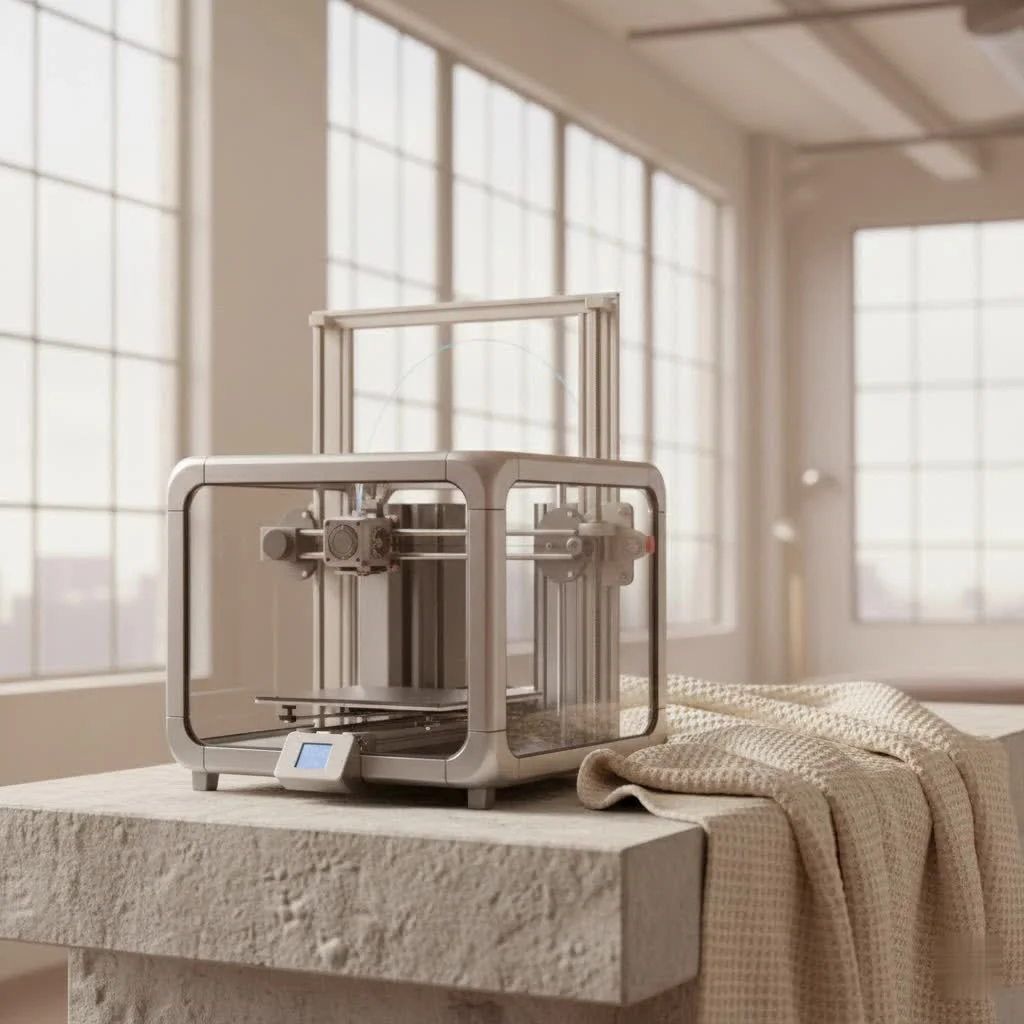
What Exactly is a 3D Laser Printer?
At its core, a 3D laser printer uses a laser as its primary tool to solidify or fuse material, creating a three-dimensional object from a digital model. Unlike traditional subtractive manufacturing that carves away material, 3D laser printing builds up objects by adding material incrementally. This process allows for incredibly complex geometries, internal structures, and lightweight designs that would be impossible or cost-prohibitive with older methods. It’s truly a game-changer for innovation across countless industries.
How Does a 3D Laser Printer Work Its Magic?
The operational principle behind most 3D laser printers revolves around selectively solidifying a powdered or liquid material. Think of it like a highly sophisticated sculptor, but instead of chisels, it uses light.
Here’s a breakdown of the typical workflow:
- Digital Design: It all starts with a 3D model created using CAD (Computer-Aided Design) software. This digital blueprint is then sliced into hundreds or thousands of ultra-thin virtual layers.
- Material Preparation: Depending on the specific technology, a bed of fine powder (like plastic, metal, or ceramic) is spread evenly across a build platform, or a vat of photosensitive resin is made ready.
- Laser Activation: A powerful laser beam is precisely directed across the material bed or resin vat, tracing the cross-section of the object for that specific layer.
- Solidification: As the laser hits the material, it either melts and fuses powder particles together (in powder-bed fusion methods) or cures and hardens the liquid resin (in vat photopolymerization methods).
- Layer by Layer: Once a layer is complete, the build platform typically lowers a tiny increment, a new layer of material is applied, and the process repeats. This continues until the entire object is formed.
- Post-Processing: After printing, the object often requires post-processing, which might include removing excess powder, washing off uncured resin, curing under UV light, or heat treatment to enhance material properties.
“The precision of laser-based 3D printing opens doors to designs previously thought impossible, allowing engineers to push boundaries in material science and structural integrity,” notes Dr. Anja Sharma, Lead Engineer at Innovate3D Labs.
Exploring the Different Types of 3D Laser Printers
While the term “3D laser printer” is often used broadly, it encompasses several distinct technologies, each with its unique advantages and material compatibilities. Understanding these can help you choose the right tool for your specific needs.
Selective Laser Sintering (SLS)
|
Our Picks for the Best 3D Printer in 2026
As an Amazon Associate I earn from qualifying purchases.
|
||
| Num | Product | Action |
|---|---|---|
| 1 | Anycubic Multicolor 3D Printer, Kobra S1 Combo Core XY Stable Structure with Sealed Printing High Precision 600mm/s Fast Speed Auto Calibration Ideal for Precision and Efficiency 9.8\"x9.8\"x9.8\" |

|
| 2 | FLASHFORGE AD5X Multi-Color 3D Printer 4 Colors with IFS, Fully Auto Leveling FDM 3D Printer with Max 600mm/s High Speed Printing and Max 300°C Nozzle, Large Printing Size 220 * 220 * 220mm |
|
| 3 | FLASHFORGE Adventurer 5M 3D Printer with Fully Auto Leveling, Max 600mm/s High Speed Printing, 280°C Direct Extruder with 3S Detachable Nozzle, CoreXY All Metal Structure, Print Size 220x220x220mm |
|
| 4 | FLASHFORGE Adventurer 5M Pro 3D Printer with 1 Click Auto Printing System, 600mm/s High-Speed, Quick Detachable 280°C Nozzle, Core XY All-Metal Structure, Multi-Functional 220x220x220mm 3D Printer |
|
| 5 | Creality Ender 3 V3 SE 3D Printer, 250mm/s Faster Print Speed CR Touch Auto Leveling Sprite Direct Extruder Dual Z-Axis Auto Filament Loading Ender 3 Upgrade 3D Printer Print Size 8.66x8.66x9.84 inch |
|
| 6 | FLASHFORGE AD5M Pro 3D Printer 600mm/s High Speed & Precision, Full-Auto Calibration with 0.4&0.6mm Nozzle Bundle, CoreXY Structure & Auxiliary Chamber Cooling, ≤50 dB Quite Printing Camera Printers |
|
| 7 | FLASHFORGE AD5X Multi-Color 3D Printer, CoreXY 600mm/s High-Speed, 1-Click Auto Leveling, 300°C Direct Drive Extruder, 220x220x220mm Build Volume, Ideal for Precision and Efficiency |
|
| 8 | Creality K2 SE Combo 3D Printer, Support Multicolor Printing with CFS, 500mm/s High-Speed, Smart Auto Leveling, Solid Metal Build Frame, Fully Assembled, Next-Gen Extruder, 220×215×245 mm Build Volume |
|
| 9 | FLASHFORGE AD5X Multi-Color 3D Printer with IFS, 600mm/s High Speed, 300°C High Temp Direct Extruder, Fully Auto Leveling, All Metal CoreXY,4-Color Printing for PLA-CF,PETG-CF, 220x220x220mm |
|
| 10 | FLASHFORGE AD5M 3D Printer Fully Auto Calibration Print with 1-Click Max 600mm/s Speed, All-Metal CoreXY Structure Precise Printing, Easy-Maintenance Quick-Swap Nozzle, Print Size 220x220x220mm |
|
What is SLS? SLS is a powder-bed fusion technology that uses a high-power laser to selectively fuse small particles of plastic, ceramic, or metal powders into a solid mass.
How does it work? The laser scans cross-sections of the 3D model, raising the temperature of the powder to its sintering point, causing the particles to bond together. Unfused powder supports the object during printing, eliminating the need for separate support structures.
Why choose SLS? Known for producing strong, functional parts with excellent mechanical properties and complex geometries without support structures. It’s ideal for prototyping and end-use parts.
Stereolithography (SLA)
What is SLA? SLA is one of the oldest 3D printing technologies, using a UV laser to cure liquid photopolymer resin, solidifying it layer by layer.
How does it work? A laser beam is directed onto a vat of photosensitive liquid resin, curing and hardening the resin where the laser hits, forming a solid layer. The build platform then descends, and a new layer is cured.
Why choose SLA? Renowned for its incredibly high resolution, smooth surface finishes, and accuracy, making it perfect for detailed prototypes, intricate models, and parts requiring fine features.
Direct Metal Laser Sintering (DMLS) / Selective Laser Melting (SLM)
What are DMLS/SLM? These are advanced powder-bed fusion techniques specifically designed for printing metal parts. DMLS sinters metal powder, while SLM fully melts it.
How do they work? A powerful laser (often fiber laser) scans and selectively melts or sinters fine metal powder particles (e.g., stainless steel, titanium, aluminum alloys) on a build platform, fusing them into a solid metal object.
Why choose DMLS/SLM? Produces fully functional metal parts with properties comparable to traditionally manufactured components. It’s crucial for aerospace, medical implants, and high-performance industrial applications where strength and heat resistance are paramount.
Materials Compatible with 3D Laser Printing
The versatility of 3D laser printers extends to the vast array of materials they can process, each offering different characteristics for diverse applications.
- Plastics: Nylon (PA), Polyamide, TPU (Thermoplastic Polyurethane) for SLS, various resins for SLA (clear, flexible, rigid, high-temp). These are common for prototypes, functional parts, and consumer products.
- Metals: Stainless steel, titanium, aluminum, cobalt-chrome, nickel alloys for DMLS/SLM. These enable the creation of robust, high-performance components for demanding environments.
- Ceramics: Specialized ceramic powders for SLS, used in applications requiring high heat resistance or biocompatibility.
- Composites: Some systems can process composite materials, often powders blended with reinforcing fibers, to achieve enhanced strength or specific properties.
Where Are 3D Laser Printers Making an Impact? Real-World Applications
The capabilities of 3D laser printers have revolutionized countless industries, allowing for innovation and efficiency never before seen.
Aerospace and Automotive
For aerospace, 3D laser printers create lightweight, strong components with complex internal structures, reducing fuel consumption and enhancing performance. In automotive, they’re used for rapid prototyping of engine parts, bespoke interior components, and specialized tooling.
Medical and Dental
From patient-specific surgical guides and custom prosthetics to dental crowns and implants, the precision and biocompatibility of materials in 3D laser printing are transforming healthcare. They allow for personalized treatment and faster recovery times.
Jewelry and Fashion
Designers can create highly intricate and unique jewelry pieces with metal 3D laser printers, often producing models for casting. In fashion, it enables the creation of complex textures and patterns for footwear and accessories.
Manufacturing and Tooling
Manufacturers leverage 3D laser printing for creating specialized jigs, fixtures, and molds, which often leads to significant cost savings and faster production cycles compared to traditional manufacturing. It also allows for on-demand parts manufacturing.
Research and Development
Researchers use these printers to rapidly prototype new designs, test theories, and develop advanced materials, accelerating the pace of innovation across scientific disciplines.
The Undeniable Benefits of Embracing 3D Laser Printing
Why are so many industries adopting this technology? The advantages are compelling.
- Unparalleled Design Freedom: Create intricate geometries, organic shapes, and internal lattice structures impossible with traditional methods.
- High Precision and Accuracy: Lasers allow for incredibly fine detail and tight tolerances, critical for functional parts.
- Reduced Waste: Additive processes typically generate less material waste compared to subtractive manufacturing.
- Rapid Prototyping: Quickly iterate and test designs, significantly shortening product development cycles.
- Customization and Personalization: Produce unique, custom-fit items on demand, from medical devices to consumer goods.
- On-Demand Manufacturing: Eliminate the need for large inventories by printing parts only when needed.
- Strong, Functional Parts: Particularly with metal laser printing, objects can possess mechanical properties comparable to wrought parts.
Frequently Asked Questions About 3D Laser Printers
Q1: Is a 3D laser printer safe to operate at home?
A: Operating a 3D laser printer, especially those using powerful lasers, requires adherence to safety protocols. Industrial-grade metal laser printers are not typically for home use. Desktop SLA printers, while safer, still require proper ventilation and handling of resins, which can be irritants. Always follow manufacturer guidelines.
Q2: What’s the main difference between an FDM printer and a 3D laser printer?
A: FDM (Fused Deposition Modeling) printers extrude molten filament layer by layer, similar to a hot glue gun. 3D laser printers, on the other hand, use a laser to solidify liquid resin or fuse powder, typically offering much higher resolution, smoother finishes, and often greater material strength and variety.
Q3: How much does a 3D laser printer cost?
A: The cost varies significantly depending on the technology and industrial application. Entry-level desktop SLA printers can range from a few hundred to a few thousand dollars. Industrial SLS, DMLS, or SLM systems can cost tens of thousands to hundreds of thousands of dollars, reflecting their advanced capabilities and material handling.
Q4: Can 3D laser printers create multi-color objects?
A: Most 3D laser printing technologies (SLA, SLS, DMLS/SLM) are typically limited to printing in a single color or material at a time. Multi-color capabilities are more common in FDM or binder jetting technologies, though advancements are continually being made in all areas.
Q5: What are the key considerations when choosing a 3D laser printer?
A: When selecting a 3D laser printer, consider the required print resolution and accuracy, the types of materials you need to use, the desired mechanical properties of your parts, the size of the build volume, and your budget. Also, think about the complexity of post-processing.
The Future is Built with Light
The journey into the world of 3D laser printers reveals a technology that’s not just evolving but rapidly expanding its influence across every conceivable sector. From enabling radical breakthroughs in medicine to revolutionizing industrial manufacturing, these machines are at the forefront of the next industrial revolution. Understanding their diverse mechanisms, material capabilities, and widespread applications is essential for anyone looking to innovate and build the future, one precise layer at a time. The possibilities are truly limitless, and for those ready to embrace them, the future is indeed bright – and laser-focused.
Get our weekly buyer guide
Practical specs, not advice. Unsubscribe anytime.