In the fast-evolving world of additive manufacturing, Stratasys 3D printers stand as a beacon of innovation, offering robust solutions that transform ideas into tangible realities across diverse industries. With over 15 years of hands-on experience in 3D printing, I’ve witnessed firsthand how these machines empower engineers, designers, and manufacturers to push the boundaries of what’s possible. From rapid prototyping to creating complex end-use parts, Stratasys has consistently delivered reliable, high-performance technology.
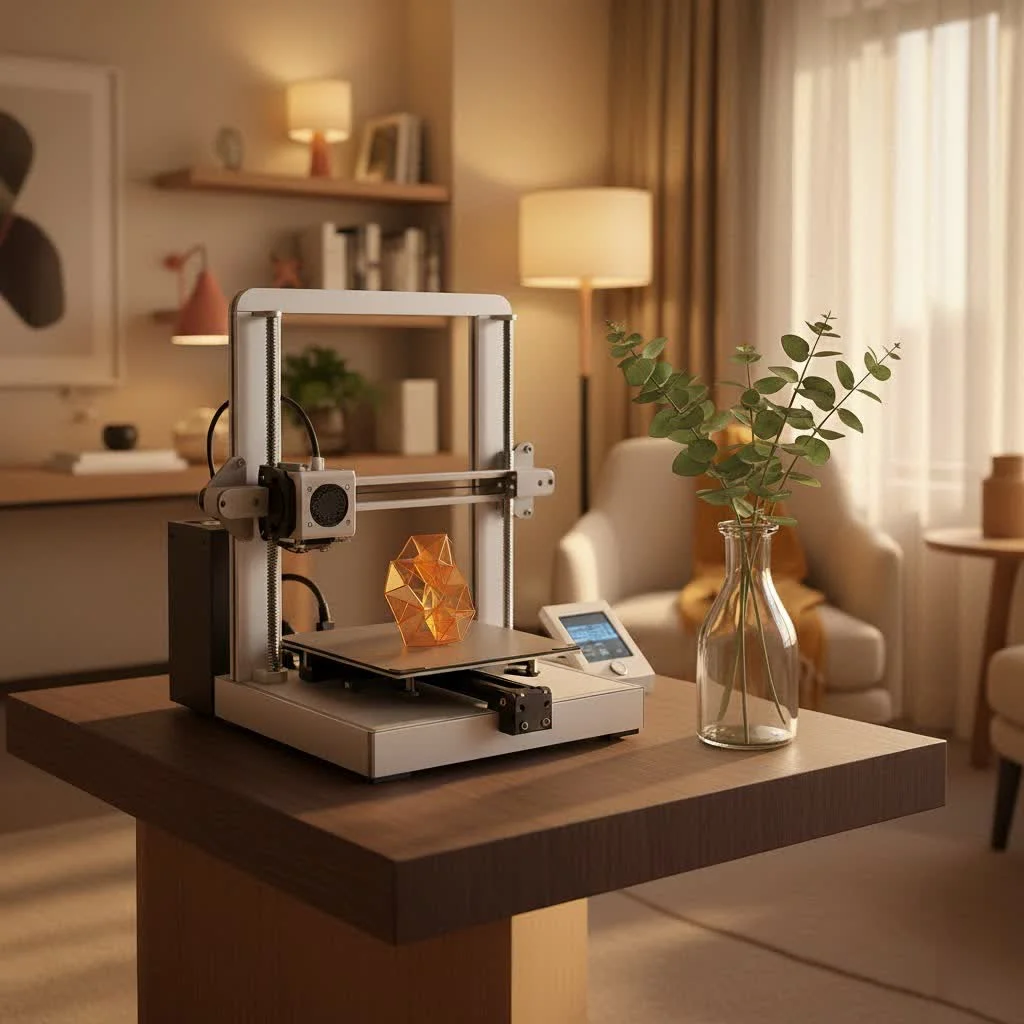
When you think about advancing manufacturing, Stratasys 3D printers often come to mind, and for good reason. They are not just machines; they are gateways to new opportunities, enabling quicker iterations, customized production, and a significant reduction in time to market. This article will explore the core technologies, diverse applications, and inherent benefits that make Stratasys a leader in the 3D printing landscape, helping you understand why investing in a Stratasys system could be your next strategic move.
The Pillars of Stratasys Technology: FDM and PolyJet
Stratasys primarily champions two distinct yet complementary 3D printing technologies: Fused Deposition Modeling (FDM) and PolyJet. Understanding these core processes is key to appreciating the versatility and capability of Stratasys 3D printers.
Fused Deposition Modeling (FDM): The Industrial Workhorse
FDM technology is renowned for its ability to produce strong, durable, and functional parts using engineering-grade thermoplastics. Imagine a highly advanced hot glue gun, precisely laying down melted plastic, layer by painstaking layer, until a complete object emerges. That’s essentially FDM, but with industrial precision and material science backing it up.
How does Stratasys FDM technology work?
Stratasys FDM printers operate by heating a thermoplastic filament to its melting point and then extruding it through a nozzle onto a build platform. This material then solidifies, bonding with the previous layer. This process repeats, building the part from the ground up. This technology excels in creating parts that need to withstand mechanical stress, heat, or chemical exposure. Common FDM materials include ABS, ASA, PC/ABS, high-performance ULTEM (such as 9085 and 1010), and even Nylon 12 Carbon Fiber, known for replacing metal parts due to its strength and light weight. Models like the F123 Series (F170, F270, F370) and the Fortus Series (Fortus 250mc, 380mc, 450, 900) are prominent examples of Stratasys FDM printers, offering varying build volumes and material capabilities for everything from concept models to full-scale production.
PolyJet Technology: Precision, Aesthetics, and Multi-Material Marvels
PolyJet technology offers a completely different approach, focusing on ultra-high resolution, smooth surface finishes, and the unique ability to print with multiple materials and colors in a single build. Think of it as a sophisticated inkjet printer, but instead of ink, it jets liquid photopolymers.
What makes Stratasys PolyJet printers unique?
PolyJet printers jet tiny droplets of liquid photopolymer resins onto a build tray. These droplets are then immediately cured by a UV light, solidifying each layer. This process allows for incredibly fine detail, thin walls, and complex geometries that might be impossible with other methods. What truly sets PolyJet apart is its multi-material capability, enabling the creation of parts with varying Shore hardness, flexibility, transparency, and even full-color textures that mimic real-world materials like wood or leather. This makes it ideal for highly realistic prototypes, medical models, and consumer product design. The Stratasys J Series printers, including the J55 Prime, J35 Pro, and specialized J5 DentaJet and J5 MediJet, showcase the pinnacle of PolyJet capabilities, offering unparalleled aesthetic quality and functional diversity.
Why Choose a Stratasys 3D Printer? Key Advantages
Investing in a Stratasys 3D printer means gaining access to a suite of benefits that can profoundly impact your operations.
Industrial-Grade Reliability and Performance
|
Our Picks for the Best 3D Printer in 2026
As an Amazon Associate I earn from qualifying purchases.
|
||
| Num | Product | Action |
|---|---|---|
| 1 | FLASHFORGE AD5X Multi-Color 3D Printer, CoreXY 600mm/s High-Speed, 1-Click Auto Leveling, 300°C Direct Drive Extruder, 220x220x220mm Build Volume, Ideal for Precision and Efficiency |

|
| 2 | FLASHFORGE AD5M 3D Printer Fully Auto Calibration Print with 1-Click Max 600mm/s Speed, All-Metal CoreXY Structure Precise Printing, Easy-Maintenance Quick-Swap Nozzle, Print Size 220x220x220mm |
|
| 3 | FLASHFORGE AD5X Multi-Color 3D Printer 4 Colors with IFS, Fully Auto Leveling FDM 3D Printer with Max 600mm/s High Speed Printing and Max 300°C Nozzle, Large Printing Size 220 * 220 * 220mm |
|
| 4 | FLASHFORGE Adventurer 5M Pro 3D Printer with 1 Click Auto Printing System, 600mm/s High-Speed, Quick Detachable 280°C Nozzle, Core XY All-Metal Structure, Multi-Functional 220x220x220mm 3D Printer |
|
| 5 | Creality K2 SE Combo 3D Printer, Support Multicolor Printing with CFS, 500mm/s High-Speed, Smart Auto Leveling, Solid Metal Build Frame, Fully Assembled, Next-Gen Extruder, 220×215×245 mm Build Volume |
|
| 6 | FLASHFORGE Adventurer 5M 3D Printer with Fully Auto Leveling, Max 600mm/s High Speed Printing, 280°C Direct Extruder with 3S Detachable Nozzle, CoreXY All Metal Structure, Print Size 220x220x220mm |
|
| 7 | FLASHFORGE AD5M Pro 3D Printer 600mm/s High Speed & Precision, Full-Auto Calibration with 0.4&0.6mm Nozzle Bundle, CoreXY Structure & Auxiliary Chamber Cooling, ≤50 dB Quite Printing Camera Printers |
|
| 8 | FLASHFORGE AD5X Multi-Color 3D Printer with IFS, 600mm/s High Speed, 300°C High Temp Direct Extruder, Fully Auto Leveling, All Metal CoreXY,4-Color Printing for PLA-CF,PETG-CF, 220x220x220mm |
|
| 9 | Creality Ender 3 V3 SE 3D Printer, 250mm/s Faster Print Speed CR Touch Auto Leveling Sprite Direct Extruder Dual Z-Axis Auto Filament Loading Ender 3 Upgrade 3D Printer Print Size 8.66x8.66x9.84 inch |
|
| 10 | Anycubic Multicolor 3D Printer, Kobra S1 Combo Core XY Stable Structure with Sealed Printing High Precision 600mm/s Fast Speed Auto Calibration Ideal for Precision and Efficiency 9.8\"x9.8\"x9.8\" |
|
Stratasys printers are engineered for the demanding environments of industrial production. They offer consistent, repeatable results, which is crucial for functional prototyping and end-use part manufacturing. “Our Stratasys F370 has proven to be quite the workhorse, meeting our quality and reliability expectations consistently,” notes a veteran engineer from Computer Aided Technology. This speaks volumes about their robust build and dependable operation.
Wide Range of High-Performance Materials
The extensive material portfolio from Stratasys caters to virtually any application. From durable thermoplastics like ULTEM 1010, which is biocompatible and suitable for aerospace and medical applications, to flexible PolyJet photopolymers that mimic soft tissue, Stratasys provides materials that meet specific performance requirements. This diversity ensures that you can always find the right material for your project, whether it’s for high-temperature resistance, chemical inertness, or aesthetic realism.
Versatility Across Applications
Whether you’re in aerospace, healthcare, automotive, or consumer goods, Stratasys 3D printers offer tailored solutions. They can be used for conceptual modeling, functional prototyping, creating manufacturing tools like jigs and fixtures, and even producing low-volume end-use parts. This adaptability makes them a valuable asset across the entire product development lifecycle.
User-Friendly Ecosystem with GrabCAD Print
Ease of use is a significant factor, especially in busy design and production environments. Stratasys’ GrabCAD Print software simplifies the 3D printing workflow, allowing users to import geometry from a wide range of CAD formats, manage print queues, and monitor material levels. This intuitive software streamlines the entire process, making 3D printing more accessible to a broader range of users without requiring extensive training. As one expert stated, “GrabCAD Print is a delight to use – everything is clearly laid out.”
Commitment to Innovation and Support
Stratasys is not just a printer manufacturer; it’s a technology innovator with a strong focus on research and development. They continually introduce new materials and improve their technologies, such as the upcoming SAF PP material developed in collaboration with BASF Forward AM. Furthermore, Stratasys backs its products with a robust service organization, providing highly trained technicians and comprehensive warranties, ensuring your investment is well-protected.
Stratasys 3D Printers in Action: Real-World Applications
The impact of Stratasys 3D printers is evident across a multitude of industries, where they are driving efficiency, accelerating innovation, and enabling breakthroughs.
Aerospace and Defense
In the aerospace and defense sectors, Stratasys 3D printers are instrumental in creating lightweight, complex parts and functional prototypes. From components for drones and unmanned aerial systems to specialized tooling and spare parts, additive manufacturing offers rapid iteration and production capabilities. Materials like Antero 840CN03, a high-performance thermoplastic with electrostatic-dissipative properties, are tailored for extreme conditions, essential for spacecraft where static can cause failures. This technology allows manufacturers to quickly test and redesign components, crucial for critical applications.
Medical and Healthcare
Stratasys has revolutionized medical 3D printing, providing solutions for everything from patient-specific anatomical models for surgical planning to custom medical devices and training aids. PolyJet technology, in particular, allows for the creation of incredibly realistic, multi-color, multi-material models that mimic the density and feel of actual human tissue and bone. This provides surgeons with invaluable hands-on experience, improving pre-surgical planning and patient outcomes. “With the new PolyJet materials that incorporate flexible and rigid within one build platform, simultaneously, we can design accurate anatomical and surgical skill trainers,” shares Jack Stubbs from the University of Central Florida. Biocompatible FDM materials like ULTEM 1010 and ABS-M30i are also used for surgical guides and medical tools, offering precise tolerances and sterilizability.
Automotive and Manufacturing
In the automotive and broader manufacturing industries, Stratasys 3D printers are transforming how parts are designed, tested, and produced. They are widely used for creating custom tools, jigs, and fixtures that enhance manufacturing efficiency and reduce costs. For instance, the Fortus 450 3D Printer allows engineers to replace metal work holding with strong, lightweight nylon materials, leading to significant savings in time and cost. This not only adds complexity and flexibility to workflow without additional costs but also allows for the production of low-batch volume end-use parts with engineering-grade thermoplastics.
Selecting the Right Stratasys 3D Printer for Your Needs
Choosing the perfect Stratasys 3D printer depends on your specific requirements and objectives.
What factors should I consider when buying a Stratasys 3D printer?
Consider the primary application: are you focused on high-detail visual prototypes (PolyJet) or strong, functional parts for end-use (FDM)? Evaluate the materials you’ll need – do you require biocompatibility, high-temperature resistance, or flexibility? Assess the desired build volume and the level of precision and surface finish required. Also, factor in your budget, operational environment (office-friendly vs. factory floor), and your need for multi-color or multi-material capabilities.
The Future of 3D Printing with Stratasys
Stratasys continues to be at the forefront of additive manufacturing, with ongoing advancements in material science and hardware. The introduction of new materials like SAF PP, which offers superior aesthetic quality and lower cost per part due to better nesting properties, exemplifies this commitment to pushing boundaries. The trend is towards increasingly integrated, automated, and user-friendly systems that further democratize access to advanced manufacturing capabilities. Expect more specialized printers and materials tailored for specific industry needs, as well as enhanced software solutions that simplify complex processes, making 3D printing an even more indispensable tool for innovation.
Frequently Asked Questions
Q1: What are the main differences between Stratasys FDM and PolyJet technologies?
A1: FDM (Fused Deposition Modeling) uses thermoplastic filaments to build strong, durable, functional parts ideal for engineering and end-use applications. PolyJet technology jets liquid photopolymers cured by UV light, excelling in high-resolution, smooth surface finishes, and multi-color/multi-material prototypes with intricate details.
Q2: Are Stratasys 3D printers suitable for small businesses?
A2: While Stratasys offers industrial-grade machines, some models like the Mojo or desktop PolyJet printers (e.g., J35 Pro) are designed to be more affordable and office-friendly, making them accessible to smaller teams or businesses needing reliable professional-grade output. However, industrial models can be a significant investment.
Q3: Can Stratasys printers produce multi-color and multi-material parts?
A3: Yes, Stratasys PolyJet printers, particularly models in the J Series like the J55 Prime and J850 Prime, are renowned for their ability to produce parts with multiple colors, textures, and material properties in a single print, offering up to 500,000 different colors.
Q4: What kind of materials can Stratasys FDM printers use?
A4: Stratasys FDM printers can use a wide range of engineering-grade thermoplastics including ABS, ASA, PC/ABS, high-performance ULTEM (9085 and 1010), Nylon 12 Carbon Fiber, and flexible materials like TPU. These offer varying properties like strength, heat resistance, and chemical resistance.
Q5: What software is used to operate Stratasys 3D printers?
A5: Stratasys printers primarily use GrabCAD Print software, which offers a user-friendly interface for preparing print jobs, managing print queues, monitoring material levels, and enabling printing from various CAD formats.
Q6: How long does it take to print a part on a Stratasys PolyJet printer?
A6: The printing time for a PolyJet printer varies depending on the part’s size, complexity, and chosen material. For example, an iPhone-sized device can take 4-6 hours, while larger or more intricate parts can take up to several days.
Ready to Elevate Your 3D Printing Game?
Stratasys 3D printers represent a powerful investment for any organization serious about additive manufacturing. Their diverse range of technologies, from the durable FDM to the highly precise PolyJet, coupled with an extensive material portfolio and user-friendly software, provides an unparalleled ecosystem for innovation. Whether you’re looking to accelerate product development, create custom tools, or produce end-use parts, Stratasys offers a reliable and high-performance solution. Embrace the future of manufacturing by exploring how a Stratasys 3D printer can transform your capabilities and help you achieve your most ambitious goals.
Get our weekly buyer guide
Practical specs, not advice. Unsubscribe anytime.