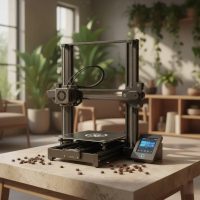
Remember when 3D printing felt like science fiction, conjuring images of tiny plastic trinkets? Well, that era is firmly in the rearview mirror. Today, the world of additive manufacturing has scaled up, literally, with the emergence of the large 3D printer. These colossal machines aren’t just scaled-up versions of their desktop counterparts; they are game-changers, pushing the boundaries of what’s possible in design, prototyping, and production across countless industries. At WMTSV.com, we’ve seen firsthand how investing in a large 3D printer can revolutionize workflows, offering unparalleled flexibility and efficiency.
What Exactly Defines a Large 3D Printer?
So, how big are we talking? While there’s no single, universally agreed-upon dimension, a large 3D printer is generally characterized by a build volume significantly exceeding the typical 15-20 cm (6-8 inch) cubic dimensions of standard desktop machines. Many industry experts define a large-scale 3D printer as having a build volume of at least 300 x 300 x 300 mm (12 x 12 x 12 inches), with industrial models often reaching build areas of 1,000 mm (39 inches) or more in at least one axis. These aren’t machines you casually tuck into a corner; they’re substantial pieces of industrial equipment designed for serious work.
Why Go Big? The Unrivaled Advantages of Large-Scale 3D Printing
The appeal of a large 3D printer goes far beyond simply printing bigger objects. It’s about unlocking entirely new capabilities and efficiencies for businesses and innovators.
Print Bigger Parts in One Go
One of the most immediate benefits is the ability to produce oversized prototypes, functional components, or artistic sculptures as a single, seamless piece. Imagine printing a full-scale vehicle dashboard or an entire architectural model without the hassle of segmenting it into smaller pieces and then bonding or assembling them later. This eliminates weak points, improves structural integrity, and drastically cuts down on post-processing time.
Enhanced Efficiency and Throughput
While “large” might suggest single massive prints, these machines are also workhorses for batch production. Their spacious build volumes allow manufacturers to nest multiple smaller parts within a single build, optimizing space and material usage. This multi-part nesting capability translates to higher throughput, lower cost per part, and significantly reduced machine idle time, making them surprisingly cost-effective for production runs.
Material Flexibility for Demanding Applications
Large-format 3D printers often boast compatibility with a broader range of industrial-grade materials than their smaller siblings. We’re talking about high-performance engineering thermoplastics, robust resins, and specialized composites like carbon-fiber reinforced filaments. This opens the door to creating parts with specific mechanical properties such as high strength, chemical resistance, flexibility, or heat deflection, crucial for demanding applications.
Faster Iteration and Time-to-Market
For industries like automotive and aerospace, rapid prototyping of large components is vital. A large 3D printer enables designers and engineers to quickly test and refine ideas at full scale, accelerating design cycles and bringing better products to market faster. This agility can translate into significant competitive advantages.
Cost Savings Beyond the Initial Investment
While the upfront cost can be substantial, a large 3D printer often yields significant long-term savings. It eliminates the need for expensive traditional tooling and molds, reduces material waste through optimized printing strategies, and accelerates production timelines. Companies have reported reducing prototyping costs by 80-90% by bringing large-format printing in-house.
Core Technologies Driving Large 3D Printers
|
Our Picks for the Best 3D Printer in 2026
As an Amazon Associate I earn from qualifying purchases.
|
||
| Num | Product | Action |
|---|---|---|
| 1 | Creality K2 SE Combo 3D Printer, Support Multicolor Printing with CFS, 500mm/s High-Speed, Smart Auto Leveling, Solid Metal Build Frame, Fully Assembled, Next-Gen Extruder, 220×215×245 mm Build Volume |

|
| 2 | Anycubic Multicolor 3D Printer, Kobra S1 Combo Core XY Stable Structure with Sealed Printing High Precision 600mm/s Fast Speed Auto Calibration Ideal for Precision and Efficiency 9.8\"x9.8\"x9.8\" |
|
| 3 | FLASHFORGE Adventurer 5M 3D Printer with Fully Auto Leveling, Max 600mm/s High Speed Printing, 280°C Direct Extruder with 3S Detachable Nozzle, CoreXY All Metal Structure, Print Size 220x220x220mm |
|
| 4 | FLASHFORGE AD5X Multi-Color 3D Printer with IFS, 600mm/s High Speed, 300°C High Temp Direct Extruder, Fully Auto Leveling, All Metal CoreXY,4-Color Printing for PLA-CF,PETG-CF, 220x220x220mm |
|
| 5 | FLASHFORGE AD5X Multi-Color 3D Printer 4 Colors with IFS, Fully Auto Leveling FDM 3D Printer with Max 600mm/s High Speed Printing and Max 300°C Nozzle, Large Printing Size 220 * 220 * 220mm |
|
| 6 | FLASHFORGE AD5M Pro 3D Printer 600mm/s High Speed & Precision, Full-Auto Calibration with 0.4&0.6mm Nozzle Bundle, CoreXY Structure & Auxiliary Chamber Cooling, ≤50 dB Quite Printing Camera Printers |
|
| 7 | FLASHFORGE AD5X Multi-Color 3D Printer, CoreXY 600mm/s High-Speed, 1-Click Auto Leveling, 300°C Direct Drive Extruder, 220x220x220mm Build Volume, Ideal for Precision and Efficiency |
|
| 8 | FLASHFORGE Adventurer 5M Pro 3D Printer with 1 Click Auto Printing System, 600mm/s High-Speed, Quick Detachable 280°C Nozzle, Core XY All-Metal Structure, Multi-Functional 220x220x220mm 3D Printer |
|
| 9 | Creality Ender 3 V3 SE 3D Printer, 250mm/s Faster Print Speed CR Touch Auto Leveling Sprite Direct Extruder Dual Z-Axis Auto Filament Loading Ender 3 Upgrade 3D Printer Print Size 8.66x8.66x9.84 inch |
|
| 10 | FLASHFORGE AD5M 3D Printer Fully Auto Calibration Print with 1-Click Max 600mm/s Speed, All-Metal CoreXY Structure Precise Printing, Easy-Maintenance Quick-Swap Nozzle, Print Size 220x220x220mm |
|
Not all large 3D printers are created equal. Different additive manufacturing technologies cater to distinct needs in terms of speed, resolution, material compatibility, and cost.
Fused Deposition Modeling (FDM/FFF)
FDM, also known as Fused Filament Fabrication, is arguably the most common large-format 3D printing technology, building parts by melting and extruding thermoplastic filament layer by layer.
- Pros: FDM is highly cost-effective, boasts a wide range of standard thermoplastics (like ABS, PLA, PETG) and engineering materials (e.g., carbon composites), making it a workhorse for functional prototypes, jigs, fixtures, and durable end-use parts.
- Cons: Compared to other technologies, FDM typically offers lower resolution and accuracy, making it less ideal for complex designs with intricate features. Large FDM prints can also be slower and often require labor-intensive post-processing to achieve a smooth surface finish.
Stereolithography (SLA)
SLA printers utilize a light source to cure liquid photopolymer resin into hardened plastic. This technology is renowned for its precision.
- Pros: SLA delivers the highest resolution, exceptional accuracy, and ultra-smooth surface finishes among plastic 3D printing technologies, perfect for highly detailed prototypes, master patterns, and medical models. It’s also often significantly faster than FDM for large parts.
- Cons: While increasingly accessible, SLA still typically has a higher initial cost than FDM. Parts also require mandatory post-processing, including washing and post-curing, which adds steps to the workflow.
Selective Laser Sintering (SLS)
SLS technology uses a high-powered laser to fuse small particles of polymer powder, layer by layer, creating robust and functional parts.
- Pros: A standout feature of SLS is that unfused powder supports the part during printing, eliminating the need for dedicated support structures. This grants unparalleled design freedom, allowing for complex geometries, internal features, and undercuts. SLS parts also exhibit excellent mechanical characteristics, often resembling injection-molded parts, with nylon being a common and versatile material.
- Cons: SLS generally has the highest entry price among the three main technologies. Parts emerge with a slightly rough, “sandy” surface finish, often requiring media blasting for a smoother look. Material selection, while expanding, is also somewhat more limited compared to FDM and SLA.
Other Notable Technologies
Beyond these, industrial large-scale additive manufacturing encompasses other powerful technologies:
- Selective Absorption Fusion (SAF): Focused on high-throughput batch production of durable end-use parts, using industrial-grade thermoplastics and enabling efficient vertical stacking.
- Binder Jetting: Particularly useful for creating large sand or wax molds for metal casting, drastically reducing tooling time and cost.
- Wire Arc Additive Manufacturing (WAAM) and Directed Energy Deposition (DED): These processes enable large-scale metal 3D printing for robust industrial components.
Real-World Impact: Where Large 3D Printers Are Making Waves
From the factory floor to specialized design studios, large 3D printers are transforming what industries can achieve.
- Automotive and Aerospace: Manufacturers like Ford and BMW leverage large-format FDM and SLA printers for full-scale prototypes, custom jigs, and fixtures, significantly shortening design cycles. The aerospace sector uses these machines to produce lightweight, durable components for aircraft, leading to fuel efficiency and increased performance.
- Architecture and Construction: Beyond intricate models, monumental large 3D printers are now capable of printing entire building components, custom facades, and even full-sized houses using concrete-based materials, as pioneered by companies like ICON. This revolutionizes construction speed and design complexity.
- Healthcare and Medical Devices: The ability to print human-scale anatomical models with high detail, using technologies like PolyJet and SLA, is invaluable for pre-surgical planning and medical training. Large-format printing also facilitates the creation of custom prosthetics, enhancing patient comfort and functionality.
- Art and Entertainment: Sculptors and prop makers use these formidable machines to bring colossal artistic visions and intricate movie props to life, often at scales previously unattainable or prohibitively expensive.
- Industrial Manufacturing: For general manufacturing, large 3D printers enable the on-demand production of custom tooling, specialized jigs, and end-use parts, allowing for agile responses to production needs and reducing reliance on external supply chains.
Choosing Your Giant: Key Considerations for a Large 3D Printer Investment
Deciding to invest in a large 3D printer is a significant step. As experts at WMTSV, we advise considering several critical factors to ensure you make the right choice for your specific needs:
- What’s Your Primary Application? Are you focused on rapid prototyping, small-batch production, custom tooling, or end-use parts? Your core use case will heavily influence the ideal technology and features.
- What Materials Do You Need? Different printers excel with different materials. Do your projects require standard thermoplastics, engineering-grade resins, flexible materials, or even metal composites? Also, consider if you prefer an open-material system (more flexibility) or a closed system (often optimized for specific proprietary materials).
- Required Build Volume and Part Size: Clearly define the maximum dimensions of the parts you plan to print. Remember, it’s not just about the largest single part, but also about the ability to efficiently batch-produce multiple smaller parts.
- Accuracy and Resolution: How detailed do your prints need to be? For highly functional parts requiring tight tolerances or visually stunning models, higher accuracy and resolution are paramount.
- Speed and Throughput: Evaluate how quickly you need parts produced. Some technologies are inherently faster for large prints, and features like multi-extrusion or optimized print strategies can dramatically impact overall throughput.
- Space, Environment, and Infrastructure: A large 3D printer requires substantial physical space and often specific electrical requirements. Consider if you’ll need a climate-controlled environment to manage humidity or airborne particles, which can affect print quality, especially for sensitive materials.
- Software and Workflow Integration: User-friendly software that integrates seamlessly with your design workflow can make a huge difference in operational efficiency. Look for intuitive slicing, monitoring, and print queue management tools.
- Budget and Return on Investment (ROI): Beyond the initial purchase price, factor in operating costs (materials, power, maintenance) and assess the potential savings from bringing production in-house compared to outsourcing. As Dr. Anja Richter, a leading materials scientist in additive manufacturing, notes, “The true power of large 3D printers lies not just in their size, but in their ability to unlock entirely new material possibilities and production workflows that smaller machines simply can’t achieve.”
- Support and Maintenance: Industrial machines require upkeep. Evaluate the vendor’s reputation for post-sales support, warranties, technical assistance, and the availability of automated maintenance features.
Busting the Myths: Addressing Common Concerns About Large 3D Printers
It’s natural to have reservations when considering such a significant investment. Let’s tackle some common misconceptions:
- “Aren’t large industrial 3D printers too expensive?” While the initial outlay can be considerable, the long-term ROI is often compelling. Savings come from eliminating expensive tooling, reducing material waste, and vastly accelerating prototyping and production cycles.
- “Is large-format printing too slow?” This is an outdated notion. Advances in printhead design, material extrusion rates, and intelligent slicing algorithms have significantly increased print speeds. Moreover, the ability to print multiple parts simultaneously within a large chamber drastically boosts overall production efficiency.
- “Do large-format 3D printers require too much maintenance?” Modern industrial large 3D printers feature advanced self-calibration, automated material handling, and remote monitoring capabilities that significantly reduce manual upkeep and minimize downtime, ensuring reliable operation.
- “Are large 3D printers only useful for oversized parts?” Absolutely not! Many industries leverage these machines primarily for batch production, optimizing the build chamber to print dozens, or even hundreds, of smaller components in a single run, thereby increasing throughput and lowering per-part costs.
Future Horizons: The Evolution of Large-Scale Additive Manufacturing
The journey of the large 3D printer is far from over. We’re on the cusp of even greater advancements, with ongoing research into new high-performance materials, smarter AI-driven print optimization, increased automation, and tighter integration with existing manufacturing ecosystems. As these technologies mature, large-scale additive manufacturing will continue to redefine how we design, produce, and innovate, solidifying its role as a cornerstone of industrial progress.
Frequently Asked Questions (FAQ)
Q: What exactly defines a large 3D printer?
A: A large 3D printer typically features a build volume significantly greater than standard desktop models, often exceeding 300 x 300 x 300 mm (12 x 12 x 12 inches) in at least one dimension, with many industrial systems reaching well over 1,000 mm. They are designed for large-scale prototyping, tooling, and production.
Q: What materials can a large 3D printer use?
A: Large 3D printers can utilize a wide array of materials, including standard thermoplastics (PLA, ABS), engineering-grade thermoplastics (PC, Nylon), photopolymer resins, and even specialized composites or powdered metals. The specific materials depend on the printer’s technology (FDM, SLA, SLS, etc.).
Q: Are large 3D printers expensive?
A: The cost of a large 3D printer varies widely. While industrial systems can range from tens of thousands to over $500,000, more accessible options are now available between $3,000 and $30,000, offering a positive return on investment in many cases by reducing outsourcing costs.
Q: Can a large 3D printer print multiple smaller parts at once?
A: Yes, absolutely! One of the key advantages of a large 3D printer is its ability to print multiple smaller parts simultaneously within its expansive build volume through a process called nesting. This significantly increases efficiency, throughput, and reduces the cost per part.
Q: What industries benefit most from large 3D printing?
A: Industries like automotive, aerospace, architecture, construction, healthcare, manufacturing, and even art and entertainment benefit immensely. They leverage large 3D printers for full-scale prototypes, custom tooling, functional end-use parts, anatomical models, and large-scale artistic creations.
Q: How fast are large 3D printers?
A: The speed of a large 3D printer depends on the technology, material, and part complexity. While some older perceptions suggest slowness, modern large-format machines, particularly those using SLA or advanced FDM/SLS systems, can be remarkably fast, often outperforming smaller printers for large parts and offering high overall throughput through batch production.
Final Thoughts: Is a Large 3D Printer Your Next Big Leap?
If you’re looking to push the boundaries of design, streamline your manufacturing processes, or simply scale up your creative potential, a large 3D printer isn’t just an option—it’s a transformative investment. It enables you to bypass traditional limitations, reduce lead times, and produce innovative solutions with unprecedented freedom. At WMTSV.com, we believe that understanding and embracing these powerful machines is essential for anyone serious about the future of manufacturing. Ready to explore how a large 3D printer can unlock new possibilities for your projects? The future is big, and it’s being printed, one massive layer at a time.
Get our weekly buyer guide
Practical specs, not advice. Unsubscribe anytime.