An industrial 3D printer is a professional-grade additive manufacturing system engineered for rigorous, high-volume production environments, offering superior speed, precision, repeatability, and material versatility compared to consumer or professional desktop models. These machines are robust, designed for continuous operation, and capable of processing advanced engineering-grade materials to produce end-use parts, tooling, and complex prototypes across various industries.
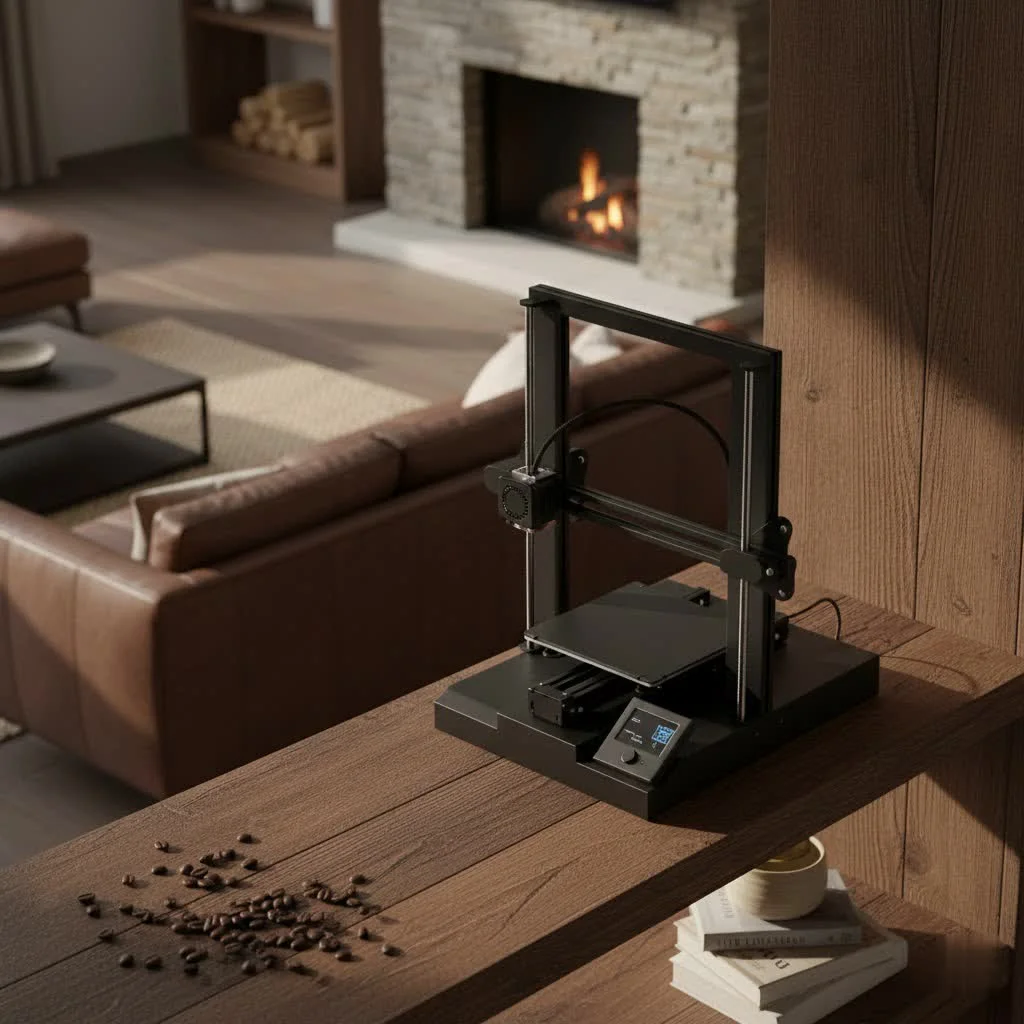
What exactly sets an industrial 3D printer apart from its desktop counterparts? It boils down to a fundamental shift in purpose and capability. While desktop printers are perfect for personal projects, rapid concept models, or small-scale prototyping, industrial machines are built for the rigorous demands of manufacturing. They offer unparalleled reliability, larger build volumes, compatibility with advanced engineering-grade materials, and the consistent repeatability crucial for producing end-use parts. This robust construction allows them to operate continuously, day in and day out, handling high-volume production with predictable results. For 3d printing buying guides on this site.
What Makes an Industrial 3D Printer “Industrial”?
When we talk about an industrial 3D printer, we’re referring to a machine built for the long haul, ready for the factory floor rather than a home office. These systems are engineered with specific characteristics that enable true industrial-scale additive manufacturing:
Robustness and Durability
An industrial 3D printer is designed to withstand continuous operation in demanding production environments. Think heavy-duty components, stable temperature control, and systems built for consistent performance under pressure, minimizing downtime and maximizing throughput. This isn’t just about surviving; it’s about thriving in a rigorous manufacturing setting.
Precision and Repeatability
In manufacturing, consistency is king. Industrial 3D printers deliver exceptional accuracy and repeatability, ensuring that every part, from the first to the thousandth, meets stringent quality standards. This level of precision is critical for functional prototypes, tooling, and especially for producing final, end-use components.
Speed and Throughput
Time is money, and industrial operations demand speed. These printers are often significantly faster than professional or desktop models, enabling rapid production of components and a quicker return on investment. High-speed printing ensures that production quotas are met efficiently, keeping projects on schedule and within budget.
Material Versatility and Advanced Engineering-Grade Options
One of the biggest differentiators is the ability to process a wide array of advanced materials. While desktop printers often use common plastics, an industrial 3D printer can handle high-performance polymers, composites like carbon fiber, and even various metals. These materials boast properties like high strength, temperature resistance, chemical inertness, and biocompatibility, essential for specialized industrial applications.
Larger Build Volume
While not universally true for all industrial systems, many offer substantially larger build volumes, allowing for the creation of bigger single parts or the simultaneous production of numerous smaller components in a single print run. This capability is vital for industries requiring large functional prototypes or high-volume small-batch manufacturing.
Key Industrial 3D Printing Technologies
|
Our Picks for the Best 3D Printer in 2026
As an Amazon Associate I earn from qualifying purchases.
|
||
| Num | Product | Action |
|---|---|---|
| 1 | FLASHFORGE AD5M 3D Printer Fully Auto Calibration Print with 1-Click Max 600mm/s Speed, All-Metal CoreXY Structure Precise Printing, Easy-Maintenance Quick-Swap Nozzle, Print Size 220x220x220mm |

|
| 2 | Creality K2 SE Combo 3D Printer, Support Multicolor Printing with CFS, 500mm/s High-Speed, Smart Auto Leveling, Solid Metal Build Frame, Fully Assembled, Next-Gen Extruder, 220×215×245 mm Build Volume |
|
| 3 | FLASHFORGE AD5X Multi-Color 3D Printer 4 Colors with IFS, Fully Auto Leveling FDM 3D Printer with Max 600mm/s High Speed Printing and Max 300°C Nozzle, Large Printing Size 220 * 220 * 220mm |
|
| 4 | Creality Ender 3 V3 SE 3D Printer, 250mm/s Faster Print Speed CR Touch Auto Leveling Sprite Direct Extruder Dual Z-Axis Auto Filament Loading Ender 3 Upgrade 3D Printer Print Size 8.66x8.66x9.84 inch |
|
| 5 | FLASHFORGE AD5M Pro 3D Printer 600mm/s High Speed & Precision, Full-Auto Calibration with 0.4&0.6mm Nozzle Bundle, CoreXY Structure & Auxiliary Chamber Cooling, ≤50 dB Quite Printing Camera Printers |
|
| 6 | Anycubic Multicolor 3D Printer, Kobra S1 Combo Core XY Stable Structure with Sealed Printing High Precision 600mm/s Fast Speed Auto Calibration Ideal for Precision and Efficiency 9.8\"x9.8\"x9.8\" |
|
| 7 | FLASHFORGE AD5X Multi-Color 3D Printer, CoreXY 600mm/s High-Speed, 1-Click Auto Leveling, 300°C Direct Drive Extruder, 220x220x220mm Build Volume, Ideal for Precision and Efficiency |
|
| 8 | FLASHFORGE AD5X Multi-Color 3D Printer with IFS, 600mm/s High Speed, 300°C High Temp Direct Extruder, Fully Auto Leveling, All Metal CoreXY,4-Color Printing for PLA-CF,PETG-CF, 220x220x220mm |
|
| 9 | FLASHFORGE Adventurer 5M Pro 3D Printer with 1 Click Auto Printing System, 600mm/s High-Speed, Quick Detachable 280°C Nozzle, Core XY All-Metal Structure, Multi-Functional 220x220x220mm 3D Printer |
|
| 10 | FLASHFORGE Adventurer 5M 3D Printer with Fully Auto Leveling, Max 600mm/s High Speed Printing, 280°C Direct Extruder with 3S Detachable Nozzle, CoreXY All Metal Structure, Print Size 220x220x220mm |
|
The term “industrial 3D printer” encompasses a diverse range of technologies, each suited for different applications and materials. Here’s a quick rundown of the most prominent ones:
- Fused Deposition Modeling (FDM): This technology, also known as Fused Filament Fabrication (FFF), is widely used for robust prototypes, tooling, jigs, fixtures, and end-use parts, especially with engineering thermoplastics. Industrial FDM printers feature heated build chambers and can process high-performance materials like ULTEM™ and Nylon-CF.
- Stereolithography (SLA): Known for producing parts with exceptional surface finish, accuracy, and fine detail, SLA uses a UV laser to cure liquid resin. It’s ideal for master patterns, high-fidelity prototypes, and large-format applications where visual aesthetics and precision are paramount.
- Selective Laser Sintering (SLS): SLS printers use a laser to selectively sinter powdered material, typically nylon, layer by layer. This technology is excellent for creating strong, functional, complex geometries without the need for support structures, making it perfect for batch production and challenging designs.
- Digital Light Processing (DLP): Similar to SLA, DLP uses a digital light projector to cure an entire layer of liquid resin at once, offering impressive speed and accuracy. It’s often used for intricate parts, dental applications, and short production runs requiring a high-quality surface finish.
- Multi Jet Fusion (MJF): HP’s Multi Jet Fusion technology prints with a fusing agent and a detailing agent onto a powder bed, then fuses the layer with infrared lamps. This results in strong, isotropic parts at high speeds and low cost per part, suitable for functional prototypes and end-use production.
- PolyJet: This technology jets tiny droplets of liquid photopolymer onto the build tray and cures them with UV light. It excels in producing multi-material and multi-color parts with varying shore hardnesses, perfect for realistic prototypes with complex textures and over 500,000 unique colors.
- Selective Absorption Fusion (SAF): SAF is a powder bed fusion technology that leverages an infrared-absorbing fluid to fuse polymer powder. It’s designed for accurate, high-volume production with consistent parts and a simplified workflow, primarily using materials like Nylon 11 and Nylon 12.
Applications Across Industries: Where Industrial 3D Printers Shine
The versatility of the industrial 3D printer has led to its adoption across a vast spectrum of industries, revolutionizing product development and manufacturing workflows.
- Aerospace & Automotive: From lightweight structural components to intricate engine parts and custom interiors, additive manufacturing enables the creation of complex geometries that reduce weight and enhance performance. It’s also vital for rapid prototyping and producing manufacturing aids.
- Medical & Dental: This sector benefits immensely from patient-specific implants, prosthetic devices, anatomical models for surgical planning, and custom dental aligners, crowns, and bridges. Biocompatible materials and high precision are critical here.
- Manufacturing & Tooling: Industrial 3D printers are indispensable for creating custom jigs, fixtures, molds, and other manufacturing aids, optimizing production lines and reducing lead times. They also facilitate low-volume serial manufacturing and spare parts production.
- Consumer Goods & Electronics: Rapid prototyping allows designers to iterate quickly, bringing new products to market faster. Customization options are endless, from personalized eyewear to unique electronic enclosures and drone components.
- Fashion & Textiles: Emerging applications include direct-to-textile printing, creating intricate designs, and producing custom components for footwear and accessories that would be impossible with traditional methods.
The Unmistakable Advantages of an Industrial 3D Printer
Integrating an industrial 3D printer into your operations offers a compelling suite of benefits that drive innovation and efficiency:
- Accelerated Product Development: The ability to rapidly prototype, test, and iterate designs drastically shortens product development cycles, allowing companies to bring innovations to market at an unprecedented pace.
- Cost Efficiency and ROI: While the initial investment might be higher, the long-term cost savings through reduced material waste, optimized designs, and streamlined production often lead to a swift return on investment. It also eliminates expensive tooling costs for low-volume production.
- Enhanced Design Freedom and Complexity: Additive manufacturing frees engineers from the constraints of traditional manufacturing, enabling the creation of highly complex geometries, lattice structures, and internal channels that optimize performance, reduce weight, and improve functionality.
- Supply Chain Resilience: Producing parts on-demand, closer to the point of use, can reduce reliance on complex global supply chains, mitigate risks, and enable localized manufacturing. This is particularly valuable for spare parts and custom components.
- Customization and Personalization: The ability to easily produce unique, one-off parts or small batches means mass customization is no longer a dream but a reality, especially in medical and consumer markets.
“Industrial 3D printing isn’t just about making things faster; it’s about making better things. It empowers engineers to design without compromise and manufacturers to produce with unparalleled agility,” remarks Dr. Amelia Vance, a leading expert in additive manufacturing with WMTSV.com. “The advancements in materials and machine intelligence are continually pushing the boundaries of what these systems can achieve.”
Choosing the Right Industrial 3D Printer
Selecting the ideal industrial 3D printer involves careful consideration of several factors: the specific applications (prototyping vs. end-use parts), required materials, desired part properties (strength, flexibility, aesthetics), desired speed and throughput, and of course, budget. Understanding your core needs will guide you toward the technology and machine best suited for your industrial workflow.
The Future is Additive
The industrial 3D printer is no longer a niche technology; it’s a fundamental pillar of Industry 4.0, driving efficiency, innovation, and competitiveness. As material science advances and printing speeds increase, we will see these incredible machines embedded even deeper into every aspect of manufacturing. The possibilities are truly endless, and for those ready to embrace this powerful technology, the future of production is already here.
Frequently Asked Questions
What defines an industrial 3D printer compared to other models?
An industrial 3D printer is a professional-grade additive manufacturing system designed for rigorous, high-volume production environments. It offers superior speed, precision, repeatability, and material versatility compared to consumer or professional desktop models, focusing on continuous operation and end-use part production.
What types of materials can industrial 3D printers utilize?
Industrial 3D printers can process a vast range of engineering-grade materials. These include high-performance thermoplastics like ULTEM and Nylon 12CF, composites such as carbon fiber, various resins (e.g., biocompatible, rigid, flexible), and even metals, depending on the specific printing technology employed.
Which industries benefit most from industrial 3D printing?
Key industries benefiting from industrial 3D printing include Aerospace & Automotive for lightweight components, Medical & Dental for patient-specific implants, Manufacturing & Tooling for custom jigs, and Consumer Goods for rapid prototyping and customization. Its versatility supports diverse applications across many sectors.
What are the primary advantages of using an industrial 3D printer?
Integrating an industrial 3D printer offers several advantages, including accelerated product development cycles, significant cost reductions by eliminating expensive tooling, enhanced design freedom for complex geometries, increased supply chain resilience, and the ability to achieve mass customization and personalization for unique products.
How do industrial 3D printers contribute to Industry 4.0?
Industrial 3D printers are a fundamental pillar of Industry 4.0 by driving efficiency, innovation, and competitiveness through localized, on-demand production. They enable smart manufacturing processes, reduce waste, and allow for rapid iteration and customization, integrating seamlessly into advanced digital manufacturing workflows.
Get our weekly buyer guide
Practical specs, not advice. Unsubscribe anytime.
Our company needed a solution for high-volume production of specialized components, and an industrial 3D printer was the answer. The reliability and continuous operation capabilities are exactly what we needed to keep our lines running smoothly. It’s a true powerhouse for manufacturing, far beyond what any desktop model could ever achieve.
We recently upgraded our prototyping lab with an industrial 3D printer, and the difference in speed and precision is night and day. The ability to use advanced engineering-grade materials has really opened up new possibilities for our product development. It’s a significant investment, but for continuous operation and end-use parts, it’s absolutely worth it.
I’ve been using a desktop printer for years, but the limitations on build volume and material versatility were becoming a real bottleneck. Moving to an industrial system has allowed us to tackle much larger and more complex prototypes. The learning curve was a bit steeper than I expected, but the output quality is fantastic.
We brought in an industrial 3D printer primarily for tooling, and while the repeatability is excellent, I’ve found the initial setup and calibration to be quite time-consuming. It’s definitely robust and handles high-volume production well once it’s dialed in, but getting to that point took more effort than anticipated. Still, the parts it produces are top-notch.