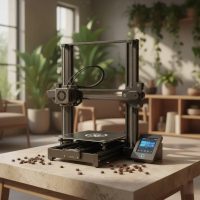
Imagine a machine that can build a copy of itself, spawning new generations of manufacturing power right on your desktop. While it sounds like something straight out of science fiction, the reality of a 3D printed 3D printer is not only here, but it’s been a driving force behind the democratic revolution in additive manufacturing for well over a decade. This isn’t just about printing trinkets; it’s about a fundamental shift in how we create, innovate, and share technology. At WMTSV, we’ve witnessed firsthand the transformative power of this concept, and today, we’re diving deep into the fascinating world of the 3D printed 3D printer.

What Exactly is a 3D Printed 3D Printer?
At its core, a 3D printed 3D printer is a fascinating embodiment of circular innovation. It refers to a 3D printer where a significant portion of its own mechanical components – primarily the plastic parts – are manufactured by another 3D printer, or even by itself. The most famous and influential project championing this idea is the RepRap (Replicating Rapid Prototyper). Founded on the principle of open-source hardware, RepRap aims to create a general-purpose self-replicating manufacturing machine that anyone can build, modify, and even improve upon. It’s about more than just making parts; it’s about making the means of production accessible to all. For expert 3d printing reviews on this site.
A Glimpse into History: The Birth of Self-Replication in 3D Printing
The journey of the 3D printed 3D printer began in 2005, when Dr. Adrian Bowyer, then a Senior Lecturer in mechanical engineering at the University of Bath, England, launched the RepRap project. His vision was bold: to create a low-cost 3D printer that could print most of its own components, thereby making the technology accessible and infinitely reproducible. This wasn’t just a technical challenge; it was a philosophical statement about democratizing manufacturing.
A pivotal moment arrived on September 13, 2006, when the RepRap 0.2 prototype successfully printed the first part identical to itself. This was a monumental step, proving the feasibility of the self-replication concept. By February 2008, the RepRap 1.0 “Darwin” model had achieved a significant milestone, being able to make over half of its rapid-prototyped parts. From these humble beginnings, the idea of the 3D printed 3D printer blossomed, igniting a global movement and laying the groundwork for the modern desktop 3D printing industry.
The Ingenuity Behind the Build: How Does a RepRap Work?
The beauty of a 3D printed 3D printer, especially a RepRap, lies in its clever design. Engineers and enthusiasts leverage the inherent capabilities of Fused Deposition Modeling (FDM) 3D printing to create the structural elements of the machine. This includes frame components, motor mounts, extruder bodies, gear sets, and even cable chains. Essentially, any part that can be effectively made from plastic using an FDM process becomes a candidate for self-replication.
However, it’s crucial to understand that “self-replicating” doesn’t mean printing every single component. Critical elements like stepper motors, electronic circuit boards (motherboards, drivers), heating elements, and smooth rods or linear rails still need to be sourced as off-the-shelf items. The project continuously explores ways to integrate more complex functions, such as printing electrically-conductive traces, to get closer to true 100% replication.
“The true genius of the RepRap lies not just in its ability to print parts for another machine, but in its ability to inspire a generation of makers,” says Ava Chen, a veteran 3D printing engineer with over two decades of experience. “It’s a masterclass in minimalist design and functional plasticity, proving that robust machines can emerge from seemingly simple components.”
The construction process involves printing a complete set of plastic parts on an existing 3D printer, then assembling these with the non-printable components. The iterative nature of RepRap development means designs are constantly being refined, leading to increasingly simpler builds, improved performance, and higher levels of self-sufficiency with each new version of the 3D printed 3D printer.
Why Build One? The Advantages of a 3D Printed 3D Printer
The allure of a 3D printed 3D printer extends far beyond the novelty of a machine making itself. It offers a compelling array of benefits:
- Cost-Effectiveness: One of the primary drivers behind the RepRap project was to lower the barrier to entry for 3D printing. By printing many of the mechanical components, the cost of the hardware kit can be significantly reduced, making 3D printing accessible to a wider audience globally.
- Open-Source Innovation: Being open-source, the designs for RepRap machines are freely available, fostering a vibrant global community of developers, hobbyists, and researchers. This collaborative environment leads to rapid innovation, customization, and continuous improvement, allowing users to adapt designs to their specific needs.
- Educational Value: Building a 3D printed 3D printer is an unparalleled educational experience. It provides hands-on learning about mechanical engineering, electronics, software, and the intricacies of additive manufacturing. It demystifies the technology, empowering individuals with a deeper understanding of how these complex machines function.
- Decentralized Manufacturing: The concept of a 3D printed 3D printer inherently supports decentralized manufacturing. Imagine being able to print tools, spare parts, or even another 3D printer kit without relying on large-scale industrial production or complex supply chains. This capability has profound implications for local production and emergency preparedness.
- Empowering the Maker Community: For many, the ability to build their own tools is deeply empowering. A 3D printed 3D printer embodies the maker spirit, providing individuals with the means to create, innovate, and share, thereby strengthening the global maker movement.
- Sustainability and Repairability: With readily available designs and printable parts, repairing or upgrading a RepRap becomes much more feasible. This can extend the lifespan of the machine and reduce electronic waste by allowing component-level repairs rather than full replacements.
Navigating the Hurdles: Challenges in Creating a Self-Replicating Machine
While the concept of a 3D printed 3D printer is revolutionary, the journey to building and maintaining one comes with its own set of challenges:
- Material Limitations: As mentioned, not all components of a 3D printer can currently be 3D printed. Motors, specialized electronics, and certain high-temperature components remain external purchases. This means true 100% self-replication is still a future goal, not a present reality.
- Precision and Quality: The accuracy and print quality of a 3D printer are heavily dependent on the precision of its mechanical structure. When building a 3D printed 3D printer, the quality of the printed structural parts directly impacts the performance of the new machine. Ensuring dimensional accuracy, smooth finishes for moving parts, and overall rigidity can be challenging, requiring careful calibration and print settings.
- Time and Effort: Building a RepRap is a project, not a plug-and-play solution. Printing all the necessary plastic parts can take hundreds of hours, consuming several kilograms of filament. The assembly itself also requires patience, attention to detail, and a willingness to troubleshoot.
- Assembly Complexity: While designs aim for simplicity, assembling a complex machine from a kit of printed and bought parts still requires a certain level of technical aptitude. Mechanical alignment, wiring, and firmware configuration are all steps that demand careful execution.
- Initial Investment and Learning Curve: While often more cost-effective than commercial counterparts, there’s still an initial investment in the base printer to produce the parts, as well as the non-printable electronics and hardware. Furthermore, the learning curve for understanding and building a 3D printed 3D printer can be steeper for newcomers compared to buying a fully assembled machine.
Beyond the Machine: The Wider Impact and Future of Self-Replication
The influence of the 3D printed 3D printer, particularly the RepRap project, cannot be overstated. It effectively ignited the open-source 3D printer revolution, demonstrating that high-quality additive manufacturing could be achieved without proprietary designs or exorbitant costs. This paved the way for countless commercial desktop 3D printers that have since emerged, many of which draw direct inspiration from RepRap’s principles and architectural choices.
Looking ahead, the pursuit of self-replication continues to push the boundaries of materials science and robotic assembly. Researchers are exploring ways to integrate more complex functions into printed components, from embedded electronics to more robust materials. The ultimate vision of machines that can fully reproduce themselves, autonomously gathering raw materials and performing assembly, remains a powerful driver for innovation. While a fully autonomous, self-replicating 3D printed 3D printer is still some way off, the foundational work done by projects like RepRap has set a trajectory for a future where manufacturing is truly decentralized, adaptable, and globally accessible.
Frequently Asked Questions
What is the RepRap project?
|
Our Picks for the Best 3D Printer in 2026
As an Amazon Associate I earn from qualifying purchases.
|
||
| Num | Product | Action |
|---|---|---|
| 1 | FLASHFORGE AD5X Multi-Color 3D Printer 4 Colors with IFS, Fully Auto Leveling FDM 3D Printer with Max 600mm/s High Speed Printing and Max 300°C Nozzle, Large Printing Size 220 * 220 * 220mm |

|
| 2 | FLASHFORGE AD5M 3D Printer Fully Auto Calibration Print with 1-Click Max 600mm/s Speed, All-Metal CoreXY Structure Precise Printing, Easy-Maintenance Quick-Swap Nozzle, Print Size 220x220x220mm |
|
| 3 | Creality Ender 3 V3 SE 3D Printer, 250mm/s Faster Print Speed CR Touch Auto Leveling Sprite Direct Extruder Dual Z-Axis Auto Filament Loading Ender 3 Upgrade 3D Printer Print Size 8.66x8.66x9.84 inch |
|
| 4 | Anycubic Multicolor 3D Printer, Kobra S1 Combo Core XY Stable Structure with Sealed Printing High Precision 600mm/s Fast Speed Auto Calibration Ideal for Precision and Efficiency 9.8\"x9.8\"x9.8\" |
|
| 5 | FLASHFORGE AD5M Pro 3D Printer 600mm/s High Speed & Precision, Full-Auto Calibration with 0.4&0.6mm Nozzle Bundle, CoreXY Structure & Auxiliary Chamber Cooling, ≤50 dB Quite Printing Camera Printers |
|
| 6 | FLASHFORGE Adventurer 5M 3D Printer with Fully Auto Leveling, Max 600mm/s High Speed Printing, 280°C Direct Extruder with 3S Detachable Nozzle, CoreXY All Metal Structure, Print Size 220x220x220mm |
|
| 7 | FLASHFORGE AD5X Multi-Color 3D Printer with IFS, 600mm/s High Speed, 300°C High Temp Direct Extruder, Fully Auto Leveling, All Metal CoreXY,4-Color Printing for PLA-CF,PETG-CF, 220x220x220mm |
|
| 8 | Creality K2 SE Combo 3D Printer, Support Multicolor Printing with CFS, 500mm/s High-Speed, Smart Auto Leveling, Solid Metal Build Frame, Fully Assembled, Next-Gen Extruder, 220×215×245 mm Build Volume |
|
| 9 | FLASHFORGE AD5X Multi-Color 3D Printer, CoreXY 600mm/s High-Speed, 1-Click Auto Leveling, 300°C Direct Drive Extruder, 220x220x220mm Build Volume, Ideal for Precision and Efficiency |
|
| 10 | FLASHFORGE Adventurer 5M Pro 3D Printer with 1 Click Auto Printing System, 600mm/s High-Speed, Quick Detachable 280°C Nozzle, Core XY All-Metal Structure, Multi-Functional 220x220x220mm 3D Printer |
|
The RepRap project is an open-source initiative founded by Dr. Adrian Bowyer to create a general-purpose, self-replicating 3D printer. Its goal is to make a 3D printer that can print most of its own plastic components, thereby democratizing access to manufacturing technology.
Can a 3D printer really print itself entirely?
No, not entirely. While a 3D printed 3D printer (like a RepRap) can produce a large number of its own plastic mechanical parts, critical components such as motors, electronics, heating elements, and smooth metal rods still need to be purchased separately.
How much does it cost to build a RepRap?
The cost can vary significantly depending on the specific RepRap model, the quality of components chosen, and whether you already own a 3D printer to print the plastic parts. However, they are generally designed to be much more affordable than many commercial 3D printers, with some basic builds potentially costing a few hundred dollars for the non-printable parts.
Is a 3D printed 3D printer as good as a commercial one?
The performance of a 3D printed 3D printer can vary widely based on the builder’s skill, the quality of printed parts, and the precision of assembly. While some well-built RepRaps can achieve excellent print quality, many commercial printers offer higher reliability, user-friendliness, and advanced features out of the box due to mass production and professional engineering.
What skills do I need to build a RepRap?
Building a 3D printed 3D printer requires a blend of skills including basic mechanical assembly, some understanding of electronics, and a willingness to learn about 3D printer firmware and calibration. It’s an excellent project for those who enjoy DIY and hands-on learning.
Where can I find designs for a RepRap?
The official RepRap website (reprap.org) is the primary hub for designs, documentation, and community resources. Other platforms like GitHub, Thingiverse, and Printables also host various open-source 3D printer designs that embody the RepRap philosophy.
Conclusion
The 3D printed 3D printer represents more than just an engineering marvel; it’s a testament to the power of open innovation and a symbol of accessible manufacturing. From Adrian Bowyer’s initial vision to the countless iterations and improvements by a global community, these self-replicating machines have reshaped the landscape of additive manufacturing. They offer an unparalleled opportunity for hands-on learning, cost-effective production, and a direct contribution to a more decentralized and sustainable future. If you’re looking to truly understand the heart of 3D printing, building or even just exploring the concept of a 3D printed 3D printer is an essential journey that we at WMTSV wholeheartedly recommend. Dive in, get your hands dirty, and experience the revolution for yourself!
Get our weekly buyer guide
Practical specs, not advice. Unsubscribe anytime.