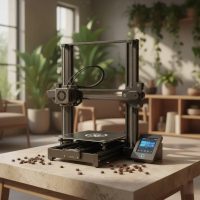
The world of 3D printing, once an exclusive domain of engineers and industrial designers, has exploded into the mainstream, bringing innovation directly to your desktop. No longer do you need to break the bank to bring your digital designs to life; the market is brimming with fantastic budget 3D printer options that offer incredible performance without the hefty price tag. Whether you’re a curious beginner taking your first steps into additive manufacturing or a seasoned hobbyist looking to expand your capabilities without a significant investment, finding the best budget 3D printer can seem daunting. But don’t worry, as a 3D printing expert with over 15 years of hands-on experience, I’m here to guide you through the exciting landscape of affordable 3D printing. We’ll explore the key features that matter most and highlight some of the top contenders that truly stand out in 2025.

Why Go Budget? Unlocking Affordable Innovation
Choosing a budget-friendly 3D printer isn’t about compromising on quality; it’s about smart investing in a tool that can deliver exceptional results for your projects. Modern advancements have made many once high-end features standard in more affordable models, dramatically lowering the barrier to entry. This accessibility means more people can explore their creativity, prototype ideas, or simply enjoy the satisfaction of printing their own custom objects. The joy of turning an idea into a tangible item, all from the comfort of your home, is now more attainable than ever. For expert 3d printing reviews on this site.
Key Features to Consider in a Budget 3D Printer
When you’re sifting through the numerous options, knowing what to look for can make all the difference. Here are the essential features to keep in mind when selecting your next budget 3D printer:
What is Automatic Bed Leveling, and Why Do You Need It?
Automatic bed leveling is a feature that takes the guesswork out of one of the most critical steps in 3D printing: ensuring your print bed is perfectly flat and at the correct height relative to the nozzle. It uses sensors to map the print surface, automatically compensating for any minor imperfections. For beginners, this is a game-changer, drastically reducing print failures and making the entire process far more user-friendly. It means less time troubleshooting and more time printing!
Direct Drive vs. Bowden Extruders: What’s the Difference?
The extruder system is responsible for feeding filament to the hotend. There are two main types:
- Direct Drive: The extruder motor is located directly above the hotend. This setup provides better control over filament extrusion, especially for flexible materials like TPU, and minimizes stringing. It’s often preferred for higher quality and wider material compatibility.
- Bowden: The extruder motor is mounted on the printer frame, and a PTFE tube guides the filament to the hotend. Bowden setups are generally lighter, allowing for faster print speeds on some machines, but can be less precise with flexible filaments.
For a budget 3D printer, a direct drive extruder offers significant advantages in versatility and print quality, even if it adds a slight cost.
Print Speed: How Fast is Fast Enough?
|
Our Picks for the Best 3D Printer in 2026
As an Amazon Associate I earn from qualifying purchases.
|
||
| Num | Product | Action |
|---|---|---|
| 1 | FLASHFORGE Adventurer 5M 3D Printer with Fully Auto Leveling, Max 600mm/s High Speed Printing, 280°C Direct Extruder with 3S Detachable Nozzle, CoreXY All Metal Structure, Print Size 220x220x220mm |

|
| 2 | FLASHFORGE AD5X Multi-Color 3D Printer, CoreXY 600mm/s High-Speed, 1-Click Auto Leveling, 300°C Direct Drive Extruder, 220x220x220mm Build Volume, Ideal for Precision and Efficiency |
|
| 3 | FLASHFORGE AD5X Multi-Color 3D Printer with IFS, 600mm/s High Speed, 300°C High Temp Direct Extruder, Fully Auto Leveling, All Metal CoreXY,4-Color Printing for PLA-CF,PETG-CF, 220x220x220mm |
|
| 4 | Anycubic Multicolor 3D Printer, Kobra S1 Combo Core XY Stable Structure with Sealed Printing High Precision 600mm/s Fast Speed Auto Calibration Ideal for Precision and Efficiency 9.8\"x9.8\"x9.8\" |
|
| 5 | Creality K2 SE Combo 3D Printer, Support Multicolor Printing with CFS, 500mm/s High-Speed, Smart Auto Leveling, Solid Metal Build Frame, Fully Assembled, Next-Gen Extruder, 220×215×245 mm Build Volume |
|
| 6 | FLASHFORGE AD5M 3D Printer Fully Auto Calibration Print with 1-Click Max 600mm/s Speed, All-Metal CoreXY Structure Precise Printing, Easy-Maintenance Quick-Swap Nozzle, Print Size 220x220x220mm |
|
| 7 | FLASHFORGE Adventurer 5M Pro 3D Printer with 1 Click Auto Printing System, 600mm/s High-Speed, Quick Detachable 280°C Nozzle, Core XY All-Metal Structure, Multi-Functional 220x220x220mm 3D Printer |
|
| 8 | FLASHFORGE AD5X Multi-Color 3D Printer 4 Colors with IFS, Fully Auto Leveling FDM 3D Printer with Max 600mm/s High Speed Printing and Max 300°C Nozzle, Large Printing Size 220 * 220 * 220mm |
|
| 9 | Creality Ender 3 V3 SE 3D Printer, 250mm/s Faster Print Speed CR Touch Auto Leveling Sprite Direct Extruder Dual Z-Axis Auto Filament Loading Ender 3 Upgrade 3D Printer Print Size 8.66x8.66x9.84 inch |
|
| 10 | FLASHFORGE AD5M Pro 3D Printer 600mm/s High Speed & Precision, Full-Auto Calibration with 0.4&0.6mm Nozzle Bundle, CoreXY Structure & Auxiliary Chamber Cooling, ≤50 dB Quite Printing Camera Printers |
|
The days of excruciatingly slow 3D prints are largely behind us. Many budget 3D printers now boast impressive speeds, often leveraging Klipper firmware or optimized motion systems. While higher speeds are appealing, it’s crucial to balance speed with print quality. For beginners, a printer that offers a good blend of both, allowing you to experiment, is ideal. Look for speeds in the range of 200-500mm/s for a fast and efficient experience.
Build Volume: How Big Can You Go on a Budget?
Build volume refers to the maximum dimensions of an object you can print. While budget printers typically have smaller build volumes than their industrial counterparts, many offer a generous enough space (e.g., 220x220x250mm or larger) for most common projects. Consider what you plan to print. Small figurines or functional parts might not need a massive volume, but if you dream of larger cosplay props or architectural models, a slightly bigger build plate will be beneficial.
Ease of Assembly and Use: Plug-and-Play or Tinker’s Delight?
For many, the appeal of a budget 3D printer lies in its simplicity. Look for models that come mostly pre-assembled or with clear, easy-to-follow instructions. Features like intuitive touchscreens, integrated software ecosystems, and automated calibration significantly reduce the learning curve, letting you get to printing faster. The goal is to minimize frustration and maximize the fun of creation.
Filament Compatibility: What Can You Print?
Most FDM (Fused Deposition Modeling) budget 3D printers handle common filaments like PLA (Polylactic Acid) and PETG (Polyethylene Terephthalate Glycol) beautifully. These are excellent for a wide range of projects. If you plan to print with more specialized materials like ABS (Acrylonitrile Butadiene Styrene), Nylon, or even carbon fiber reinforced filaments, ensure your chosen printer has an all-metal hotend capable of reaching higher temperatures and ideally an enclosed build chamber to maintain consistent temperatures.
Open-Frame vs. Enclosed Designs: What’s Best for You?
- Open-Frame Printers: These are the most common in the budget category. They are generally more affordable and easier to access for maintenance. They work great for PLA and PETG.
- Enclosed Printers: These have a closed printing chamber, which helps maintain a stable temperature. This is crucial for printing materials like ABS that are prone to warping due to temperature fluctuations. While less common in the ultra-budget segment, some options like the Flashforge Adventurer 5M offer this benefit at a competitive price.
Top Picks for the Best Budget 3D Printer in 2025
Based on extensive testing and community feedback, these budget 3D printers stand out for their exceptional value, performance, and user-friendliness in 2025:
Bambu Lab A1 Mini: The Beginner’s Dream with a Splash of Color
The Bambu Lab A1 Mini has revolutionized entry-level 3D printing. This compact machine, often available for around $199 (without AMS Lite) or $349 (with AMS Lite), offers a suite of premium features. It boasts fully automatic calibration, incredibly quiet operation, and impressive print quality and speed. What truly sets it apart is the optional AMS Lite system, allowing for stunning multi-color prints – a feature rarely seen in this price range. It’s a true “plug-and-play” experience, perfect for those who want to jump straight into printing without the typical beginner hurdles.
Creality Ender 3 V3 SE: The Undisputed Ultra-Budget Champion
For those with a very tight budget (often under $200), the Creality Ender 3 V3 SE is an outstanding choice. It significantly improves upon the classic Ender 3 series with features like a reliable direct drive extruder, automated bed leveling, and a PEI flexible build plate. While not the fastest, it delivers decent print quality and is incredibly easy to set up, making it a reliable workhorse for beginners. It’s an excellent entry point into the hobby, proving that you don’t need to spend much to get started.
Elegoo Neptune 4: Speed and Features for the Savvy Saver
The Elegoo Neptune 4, priced around $230-$280, offers an impressive array of features for its cost. It often comes with pre-installed Klipper firmware, enabling print speeds up to 500mm/s, and a high-temperature hotend capable of reaching 300°C. With a 4.3-inch touchscreen, auto bed leveling, and Wi-Fi connectivity, it delivers a fast and intuitive printing experience. While some users report minor quirks, its performance-to-price ratio is hard to beat, making it a strong contender for those seeking speed on a budget.
Anycubic Kobra 2 Neo / Kobra 2 Pro: High-Speed Printing Made Easy
Anycubic’s Kobra 2 series, particularly the Neo (around $199) and Pro (around $279-$349), are excellent budget-friendly options known for their high print speeds and user-friendly designs. The Kobra 2 Neo offers a respectable 250mm/s speed, while the Kobra 2 Pro pushes it further to 500mm/s. Both feature automatic leveling, a PEI magnetic platform, and quiet operation. The Kobra 2 Pro also includes APP control for remote management, making it an intelligent and fast choice for those looking for a balanced machine.
Flashforge Adventurer 5M: Enclosed Printing on a Budget
If you’re looking to print with more advanced materials that benefit from a controlled environment, the Flashforge Adventurer 5M (around $299) offers a fantastic value. While it’s the “barebones” version of the 5M Pro, it’s a capable CoreXY machine that comes pre-built with automated calibration and Klipper firmware for fast printing. The enclosed design, even if basic, is a significant advantage for tackling filaments like ABS, providing a stable printing environment.
Expert Insight: Choosing Your First Budget 3D Printer
“The most common mistake I see beginners make is overthinking their first purchase,” says Dr. Amelia Vance, a veteran 3D printing engineer and WMTSV’s lead content creator. “My advice is simple: start with a reliable, user-friendly budget 3D printer that offers good automatic features. Printers like the Bambu Lab A1 Mini or Creality Ender 3 V3 SE dramatically reduce the initial learning curve, letting you focus on the fun part – creating. Once you understand the basics, you can always upgrade or expand your printer’s capabilities. Don’t let perfection be the enemy of getting started!”
Budget 3D Printing: Tips for Success
Even with the best budget 3D printer, a little knowledge goes a long way:
- Start with Simple Prints: Begin with small, straightforward models to get a feel for your printer and filament. The classic “Benchy” boat is a great test print.
- Learn About Filament Types: Understand the properties of PLA and PETG before venturing into more exotic materials. Each filament has its ideal temperature settings and environmental requirements.
- Join Online Communities: The 3D printing community is vibrant and helpful. Forums, Reddit groups, and YouTube channels are excellent resources for troubleshooting, tips, and sharing ideas.
- Regular Maintenance is Key: Keep your printer clean, ensure the bed is leveled (even if automated, a quick check never hurts), and inspect for any loose parts. A well-maintained printer performs better and lasts longer.
Frequently Asked Questions
How much should I spend on a budget 3D printer?
You can find excellent budget 3D printers for under $300, with some capable options even below $200. Printers in the $300-$500 range often include more advanced features like multi-color printing or higher speeds.
Are budget 3D printers good for intricate details?
Yes, many modern budget FDM 3D printers can produce surprisingly intricate details, especially with fine-tuned settings and smaller nozzle sizes. However, for extremely fine details (like jewelry or highly detailed miniatures), resin (SLA) printers might be a better, albeit different, budget option.
Can I upgrade a budget 3D printer later?
Absolutely! Many budget FDM printers, especially those based on open-source designs, are highly moddable. You can often upgrade extruders, hotends, mainboards, and even add enclosures to enhance performance and material compatibility.
What’s the easiest budget 3D printer to use?
Printers like the Bambu Lab A1 Mini are widely considered among the easiest for beginners due to their extensive automatic calibration, intuitive interfaces, and integrated software ecosystems. They are designed for a “plug-and-play” experience.
What kind of maintenance do budget 3D printers need?
Regular maintenance for FDM printers includes cleaning the print bed, ensuring the hotend and nozzle are clear of debris, lubricating moving parts (like lead screws), and checking belt tension. These simple steps help maintain print quality and extend the printer’s lifespan.
Is multi-color printing possible with a budget 3D printer?
Yes, some budget 3D printers, most notably the Bambu Lab A1 Mini with its AMS Lite system, offer multi-color printing capabilities. This allows you to print objects with up to four different colors, adding a new dimension to your creations.
Conclusion
The landscape of budget 3D printers in 2025 is more exciting and accessible than ever before. With innovations driven by brands like Bambu Lab, Creality, Elegoo, and Anycubic, you no longer have to choose between affordability and capability. By understanding key features like automatic bed leveling, extruder types, and print speed, and by considering our top recommendations, you’re well-equipped to make an informed decision. The power to create, innovate, and bring your ideas into the physical world is now within reach. So, dive in, explore, and confidently start your 3D printing journey with the best budget 3D printer for your needs! The possibilities are truly endless.
Get our weekly buyer guide
Practical specs, not advice. Unsubscribe anytime.